French students are talking about revolution
The future looks bleak. While the fascist tech-bro billionaires bathe in eyewatering extravagance, life is set to get worse for the rest of us. Incomes not rising above the cost of living, more extreme and catastrophic climate events, and the constant looming threat that tensions between the United States of America and China could escalate into war.
It’s hard not to face this reality and despair. But actually, the worst thing you could do in the face of this, is nothing.
That’s why the student rebellion shaking France is a beautiful development. The image of dozens of students atop the Monument à la République in Paris perfectly captures the spirit of this moment. A student at the centre holds a blue flare, mirroring Liberty with her torch. Amongst the patchwork of placards reads one that says “levez-vous”; rise up. More than two centuries on from the Great French Revolution and students have reminded us that freedom and equality are not values granted by stone statues of the past, but have to be wrestled from the powerful by the living, breathing people of today.
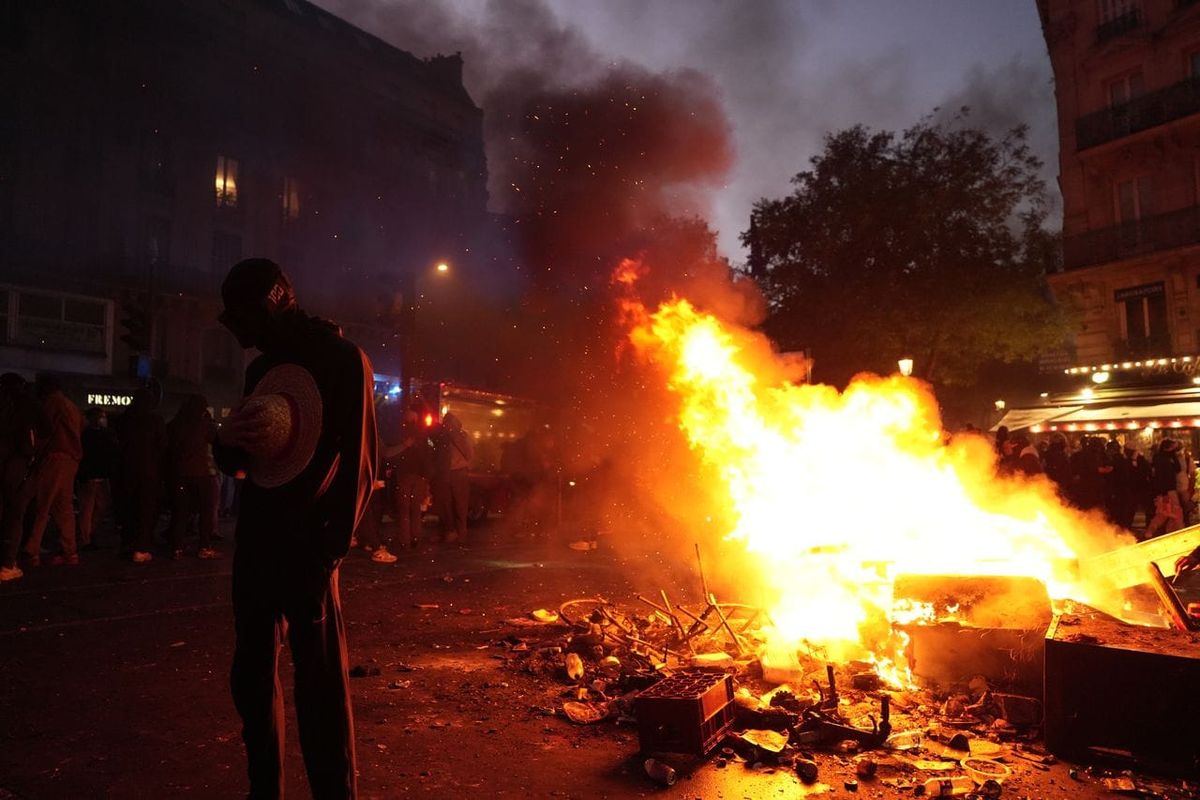
Since the end of September, high school (lycée) and university students have blockaded their schools, campuses, and suburbs. Defying the extreme violence of the police and gendarmes, they have gone on strike from school, and marched in the hundreds of thousands in all of the major cities and towns.
Why are students rebelling? It’s the crisis in the education system. Students and staff across France report rat infestations in classrooms, crumbling infrastructure, and shortages of basic supplies like toilet paper. French classrooms are not equipped to deal with the extreme heat that France just faced last summer. School days are long, class sizes have blown out, and teacher shortages are rife. According to DW, only 12% of the lessons cancelled at short notices in 2024-25 were covered by other teachers. Teachers in France are some of the lowest paid in Europe, with French high school teachers earning roughly 60% of what German teachers make.
In the face of this crisis, Prime Minister Sébastien Lecornu plans to slash public spending by €54 billion ($87.01bn AUD). Students have highlighted the hypocrisy of a government claiming public debt as the reason for real cuts to education and the public sector, while €63.4 billion ($102.14bn AUD) has been earmarked for the military in 2027, off the back of €57 billion ($91.83bn AUD) this year.
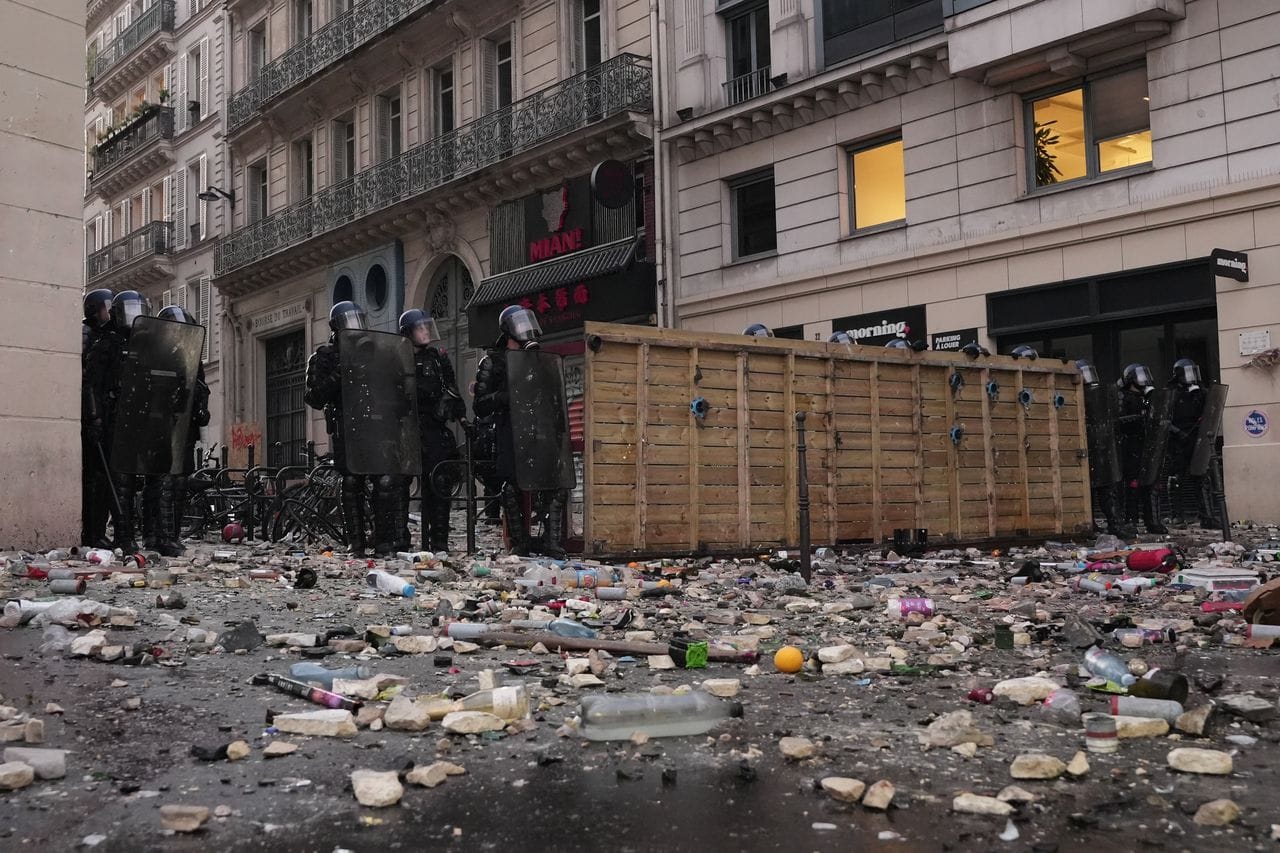
Students are frustrated by the deep inequalities within the education system. One focus of the movement is the web portal Parcoursup, used to determine student admission into public universities. The system is opaque and has been accused of discriminating against working class and racially oppressed students. What is heartwarming is that students from middle class and rich backgrounds have joined the movement in solidarity with students from the working class banlieues. Students at Henri IV in Paris who joined the movement have been heard chanting “On est privilégié! On veut partager!" (“We're privileged! We want to share!”)
One of the coolest things about this movement is that the organisation is really serious and democratic. Mass assemblies take place across the schools and universities, where students from different political groupings have been debating the path forward. This has become widespread. On October 10th, a meeting of 200 delegates from 71 schools met to coordinate several days of action for the following week. Last Saturday’s turnout to a day of action against the rising cost of living was significant, with 800,000 people out in protests across France. It was not simply the scale of these protests that mattered though. What’s more is that this was a combined demonstration of students and workers.
For many workers across France, the issues raised by students are not confined to them. The students have created a megaphone for the despair and anger felt more broadly by ordinary people. The question of whether the movement can deepen into the more generalised struggle by workers has been on everyone’s minds. The possibility of this happening is not fanciful. In recent years in France workers in their unions have waged impressive battles against the Macron regime. The last major struggle was in 2023 against the governments’ attempts to raise the age of retirement. Workers waged impressive strikes across industries, with electricity workers taking the liberty to wage “Robin Hood strikes” – where working class homes, schools, and hospitals were granted free electricity, while the rest of the country was in blackout.
Students here should take inspiration from our peers in France. But we shouldn’t see this rebellion as simply a “French” thing. There’s nothing about eating pain au chocolat for breakfast that makes you more likely to have a revolution. What French students do have on their side is that the flame of resistance has been kept alive by generations of people who made the conscious decision that doomscrolling your way out of a crisis is guaranteed to make things worse. These people all have burdens in their lives; as I said, school days in France are cripplingly long (10 hours!) but this hasn’t stopped them from organising a fightback. Students everywhere, including Australia, should look to France and start to figure out how we’re gonna organise a movement like that here. Our future depends on it.