‘Fun’, ‘high energy’, ‘familiar, but kind of absurd’: Actor and theatremaker Lachlan Grogan on Service
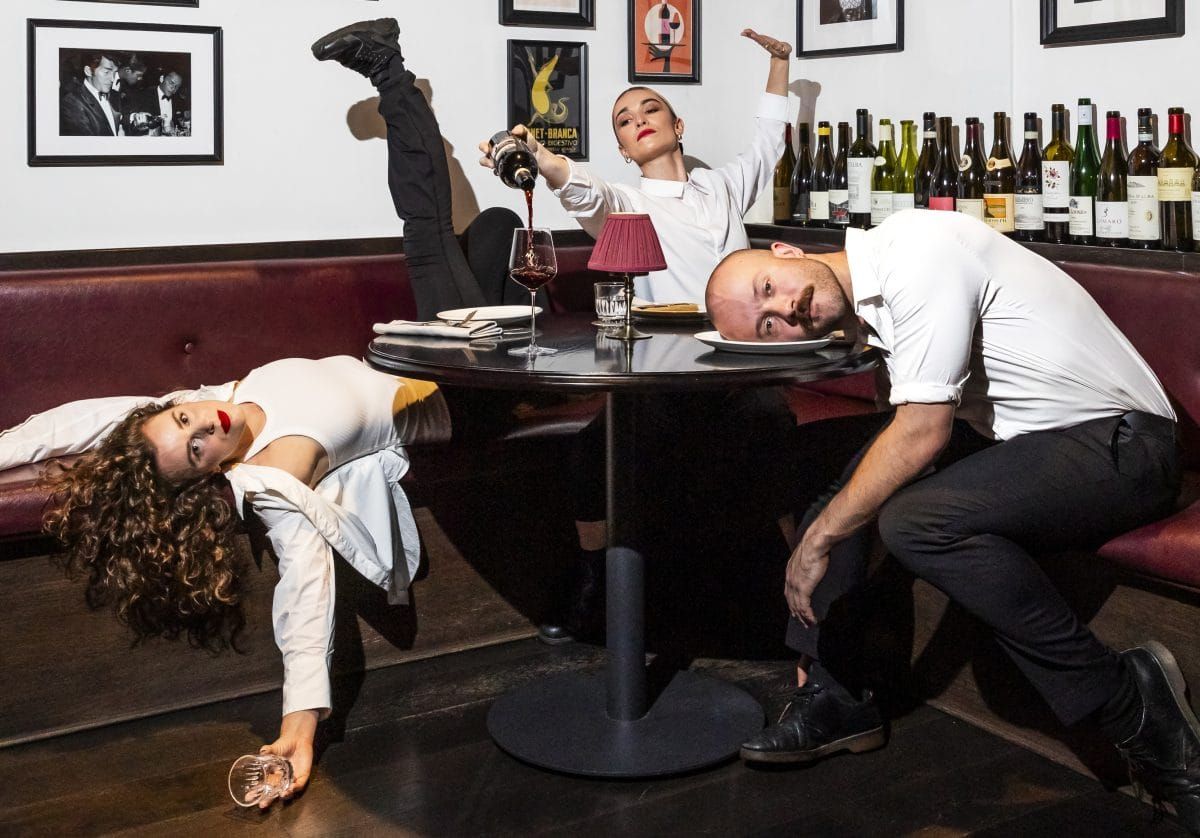
A surrealist take on the highs and lows of the hospitality industry, Service is an upcoming dance-theatre production written by Lachlan Grogan. After spending much of his early career working as a waiter, Grogan has endeavoured to produce a performance that is both “a love letter and a breakup text” to the hospitality community. He has extensive experience dancing in corporate events around Australia, as well as working in local musical theatre. With opening night less than two weeks away, I talked with Grogan about the process of bringing an ambitious project such as Service to life.
August: So could you tell me about yourself and the process of creating Service?
Lachlan: Absolutely. My name is Lachlan. I’m a 28-year-old theatre-maker and dancer from Wollongong, I guess. I’ve worked in hospitality for like ten years. So, the process of making the show… I’ve made this show through the MERRIGONGX program, which is a program that supports local theatre-makers and artists to stage and create and develop full-length theatrical works through Merrigong Theatre Company. So I’ve been in development for this show for three years now, which is… it’s crazy. I also graduated from university this year, so now that it’s about to happen, it feels like… You know when you see someone you haven’t seen in a while and they say, ‘What have you been up to?’ I would say, ‘Well, I’ve been doing this degree, and I’m doing this show,’ and now they’re both about to be over. So I feel like I don’t really know who I am anymore. [He laughs]
A: That’s a positive outlook on it!
L: It really is. I've been having a mental health crisis, but that’s it. It’s been a really amazing process.
A: Speaking of the MERRIGONGX program, what was it like to develop your production through them?
L: It’s been amazing. I really cannot rave enough about that process. I think that anybody who lives around here, who is local and has any interest in making theatre or any interest in theatre at all… I think everyone should just push themselves to try and take advantage of it because it really is so useful. Because prior to that I was auditioning for musical theatre and going to auditions and I think it’s important for people who are interested in theatre to realise that you can just make stuff yourself. Because it does begin [feeling] very demoralising, especially when you [see] the mould, particularly for musical theatre, there is a type of person that is more likely to be booked, or some skillsets that are more likely to be booked. But there are a lot of interesting stories out there. So, absolutely. Couldn’t recommend it enough! It’s great.
A: Since you have experience in the hospo industry, can you give us a rundown of your best and worst experiences?
L: Okay… I mean, how much time do we have? [He laughs] I mean, there are so many good ones and so many bad ones. It’s really crazy. The best ones are… I mean, I’ve had people one time leave the restaurant – a table that I had looked after – they left and they went to Kurtosh, and bought me cake, and brought it back as, like, a gift.
A: Oh, that’s so nice, what the hell?
L: It’s, like, crazy nice! I actually was kind of like, this is actually too nice.
A: Damn, you must have been a good waiter.
L: I mean, what can I say? That’s why they pay me the big bucks. I think the real preferable one, though, is one time someone said to me, ‘I know you split all the tips here. Can you just give me your bank details and I’m going to instantly transfer a tip to your account?’ And I said, ‘Everyone else in my section, listen up. Listen up to what this man is saying. Because you could all take a note out of his book.’ It was pretty fantastic. And then in terms of worst experiences, I mean… I’ve had people cry. I’ve had people, y’know, insult my character. People yelling in my face. I think that’s the worst ones. I mean, there’s one thing in the show that I really make fun of because I think the hospitality industry has taken a wrong turn. I feel like you can’t go out to a restaurant right now without enduring a five-minute monologue from the waiter about why their restaurant is different. Everyone’s like, ‘We do things a little differently here. All of our small plates are $25, and all of our wine tastes like vinegar!’
A: ‘...and that’s why we’re unique!’
L: That’s right! ‘We’re unique. Small wine bar, small plates, and here’s a story about the local farmers who made it and my nan who died.’
A: Like, who cares? I just want to eat.
L: That’s right. And it’s like, there is room for all of those things, but we’re just… it’s not rocket science. They’re like, ‘So this is the menu!’ And I’m like, yes, I know what the menu is. I understand. You know what I mean? Seriously…
A: So you have a background in productions such as Romeo & Juliet and Legally Blonde. What’s been the main difference in creating and performing your own piece versus interpreting someone else’s?
L: Great question! When you do another production, there is a real clear cut pathway to getting to that place, and there’s a lot of reference material that if you really feel stuck about a choice or a line or a part of the production, you can see someone else do it and kind of figure it out through them. When you’re making it up yourself, you really have to fight the urge, or really sink into the idea that maybe something just needs more work. But there’s also always the voice of, ‘maybe it’s just bad, and I can change it.’ So it really is just a process of trusting yourself to be like, ‘no, I believe in this idea, I just haven’t found it yet.’ So you need to attack it from another angle, and sometimes you’ll do that a hundred times and then you’ll get to the end of it and be like, ‘oh no, actually the idea is… bad!’
A: But the experience is still worth it.
L: Absolutely. It’s so freeing. And it’s an amazing process… in a full-length show, so many choices have to be made. So you really just have to back everyone and figure out the way it works.
A: What drew you to the medium of dance and movement theatre for Service?
L: When I was working in hospitality, it’s a very physical job, it’s very demanding. It’s a lot of constant movement. And I also felt like everyone who works in a restaurant has a particular movement quality and a particular pathway, like waiters walk differently to bartenders, who walk differently to chefs, who walk differently to customers. It’s like you adopt a certain movement quality when you enter the space. I was also charmed by the idea that in restaurants, you go out to eat, you sit down at your table, you remember what happens at your table, you leave. Bob’s your uncle, good times. But… everybody else in that space is also doing the same thing. So, what I wanted to do by removing dialogue is that the whole show is a feeling of like you’re watching a table from across the room at a restaurant where you can see what’s happening, but you can’t hear what they’re talking about.
A: Oh, that’s so cool!
L: Thank you! It’s like, that whole idea that theatre exists all around you all the time. But it’s whether or not you choose to engage with it or participate in it.
A: How do you hope audiences will connect or react to Service?
L: I hope people love it. I also hope people hate it. Because I just hope that people come and genuinely feel some type of way about it. I think that’s the point of theatre. I can’t make it hoping that everyone says, ‘Wow, what a cool show that was!’ But I hope people have genuine critical thoughts about the whole process. I think it’s fun, it’s high energy… It will feel familiar, but kind of absurd at the same time. And it’s also just over an hour, which I think more shows should be.
Service is running from the 24th to the 26th September. You can get your tickets from the Merrigong Theatre Company website.