Table for one, cost for us all: Scully helps deliver final nail into Australia’s net zero promise
It is an odd thing to be both a waitress and to spend eight hours of your week volunteering for a Community Legal Centre, within the chaos of a firm working tirelessly and desperately to oppose the largest coal mine expansion in New South Wales history, only to spend my evening in my hospitality role serving dinner to the man that paved the road for it to happen.
When Mr Paul Scully, the Wollongong member of the NSW Legislative Assembly and state Planning Minister, sat down at table 2 of my venue last week, I found myself spending my evening serving him dinner and drinks. I was faced with the eerie existential dissonance of the whole thing, the choice of finishing my shift, carrying on with my night, but what I really wanted to ask was “why?”
In the days following that night, Mr Scully attempted to deliver a speech in state parliament celebrating such a “State Significant” approval, when he was faced with protesters from the activist group Rising Tide.
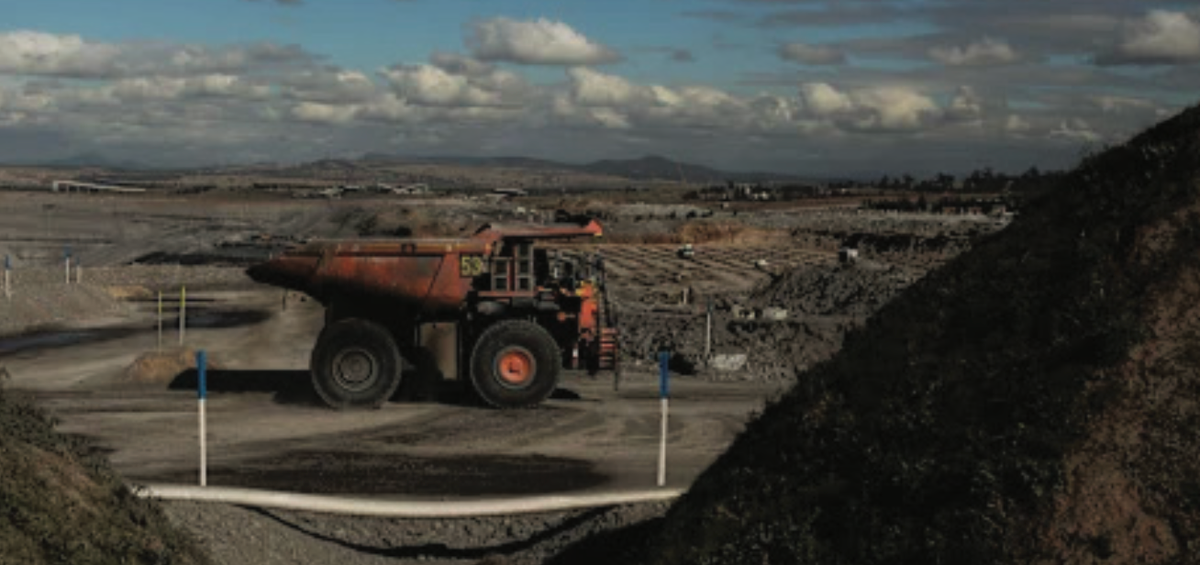
On the 30th of September 2026, the Independent Planning Commission of the New South Wales Government approved the Hunter Valley Operations coal mine continuation project. The expansion is set to be the largest in state history, emitting 809 metric tonnes of greenhouse gases; the operation has been approved to continue until 2045. The NSW Net Zero commission acknowledged that the expansion is not consistent with Australia’s international law obligations under the Paris Agreement.
“The Commission recognised the proposed emission of 809Mt of greenhouse gases from local mining operations and coal combustion overseas would contribute to climate change impacts on the people, economy and environment of the Hunter region, NSW and globally,” the commission stated.
This decision comes alongside the latest data on Australia’s impending “super el-nino,” set to be the most significant warming of the Pacific Ocean in 1,000 years. Scientific projections from the Climate Impact Lab state that 260 excess heat-related deaths will occur between the later months of 2027 into February 2027, 120 of those will be within NSW.
In May 2026, Mr Scully signed a letter requesting that the IPC conduct a public hearing to determine the fate of the coal mine within 12 short weeks; he specifically requested that the IPC “pay particular attention” to his office’s assessment report.
In June of 2026, Mr Scully’s office released the ‘Hunter Valley Operations Continuation Project Assessment Report’. His office advised the IPC of the importance of the economic and employment benefits of the project, stating “The project would provide job security for the existing workforce which comprises around 10% of the existing workforce directly employed in mining in the Hunter.” Research conducted by The Guardian and Octec finance has found that if climate change is not sufficiently addressed, Australia’s GDP would be 9% lower than it would otherwise be in 2050, causing widespread and significant job loss in the long term.
Mr Scully’s report also asserted that HVO has “avoided, minimised and committed offset emissions…the net emissions from the project follow a downward trajectory that is consistent with the NSW emissions reduction trajectory.” The Climate Council of Australia states that the over 800 metric tonnes of greenhouse gasses will be a “climate bomb to supercharge climate disasters.”
So as I finished my shift that night, Mr Scully left table 2, and I reflected on my time at the firm. Pouring over hundreds of submissions, members of the public pleading for the IPC to listen to them, to read the science, and consider the future of the community. The disconnect felt insurmountable at that moment. While we the young people of Mr Scully’s electorate will be the victims who inhabit the climate reality that is stretched out across his ‘assessment report’, it seems Mr Scully and Premier Chris Minns will continue to push carbon consequences out of sight.