
Engineer's recipe: How to make concrete
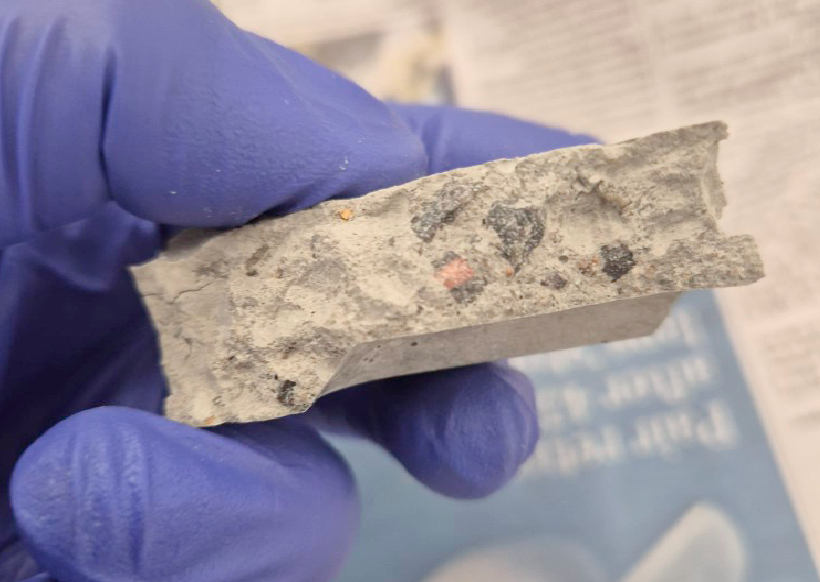
When I joked about enjoying the taste of concrete, I was met with thunderous laughter that filled the room. Apparently, the fact that I may have licked, or even eaten, concrete was not difficult to imagine. In my very humble engineering student’s opinion, there really is nothing better than some fresh concrete for lunch (I would say it tastes like sand … mixed with some dirt).
Now that the complexities of taste are out of the way, I’m sure you’re all dying to know what the true recipe for concrete is, and my truth to you is that … there isn’t one. Australia is a leading developer in concrete manufacturing, to the extent that most of the materials found in concrete are waste materials produced by other industries. I’m sure most of you would agree that materials such as ‘slag’ don’t sound so luxurious, but when you realise that it can either be used as a binder (fine powdery substance used to activate other materials) or an aggregate (adding strength and stability), you just can’t help yourself from getting a bit hungry. Although I can’t imagine fly ash would be very good for the stomach lining because it’s a byproduct of coal combustion. That’s beside the point. Both ingredients are integral parts of making a hearty meal that freely flows through the pipes.
Despite the outstanding points I’ve already made, let’s get to the real glue of this piece: cement. I wouldn’t blame you if, like me, you didn’t realise that cement and concrete aren’t interchangeable. I learned from my mistake when an extremely modest engineering professor, who shall remain unnamed, clarified that it isn’t a deliciously buttery spread. Rather, they’re rocks crushed so finely that it could be mistaken for salt … only smaller and much less salty. So essentially, cement is the agent in concrete that reacts with all the other materials to fuse them after water is added. To achieve a substance like that of cement we must, of course, have access to a massive kiln and a quarry that produces limestone, clay and gypsum. Then, simply heat it to approximately 1500˚C, and we get ‘clinker’, which consists of CaO, SiO2, AlO and FeO. Sounds like a truly balanced diet to me!
Finally, now that we have all our ingredients, we can begin the recipe for an engineer’s ultimate meal. Assuming we only need a small amount of concrete, let’s say 1m3, we would need to use an agitator (a drum-like machine) that can constantly rotate about 2.4 tonnes of wet concrete. Think of it like a delicious goulash that you need to keep stirring. So, if an agitator is available to us, we would then add the cement, aggregate, binding material and water. Just keep in mind, as soon as the water is added, you’d better stir like your life depends on it.
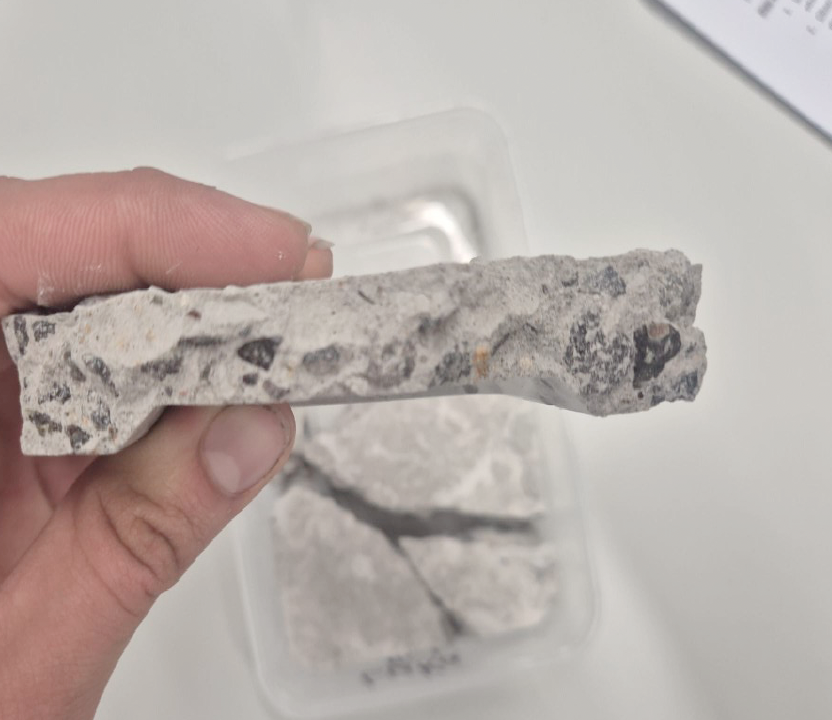
Here comes the difficult part: making sure the ratios are correct. Let’s say we’re aiming for 25MPa compressive strength (that’s about 1500 bin chickens, or about 0.025 blue whales all applying force downwards), we will want to aim for a 20mm aggregate and 80mm slump size. Slump will essentially determine how wet your concrete is; which, of course, the moister it is, the better it’ll slide down your gullet. No one likes their concrete dry … especially when it comes out the other end!
So, there you have it, a recipe for making concrete. Oh, you wanted the recipe spelled out for you. You should have just asked!
- Add 1 part cement (40%), slag (40%), and fly ash (20%) to your agitator or wheelbarrow.
- Then, add 2 parts of fine aggregate – such as sand.
- 2 parts coarse aggregate – either gravel or stone, sized about 10mm-40mm.
- Finally, add water. This is totally up to how saturated you want your concrete. My preference is 40% compared to the binder, resulting in an oatmeal-like consistency.
By now, my mouth is salivating and my stomach is grumbling. But there we have it! The perfect guide to making some delectable concrete. If there are any other engineering culinary delights you would like to learn about, please write in and let us know! Maybe you’ll see it in our following issues.
Love,
The Very Hungry Engineer!