First May Day music comp in Wollongong turns prose into power
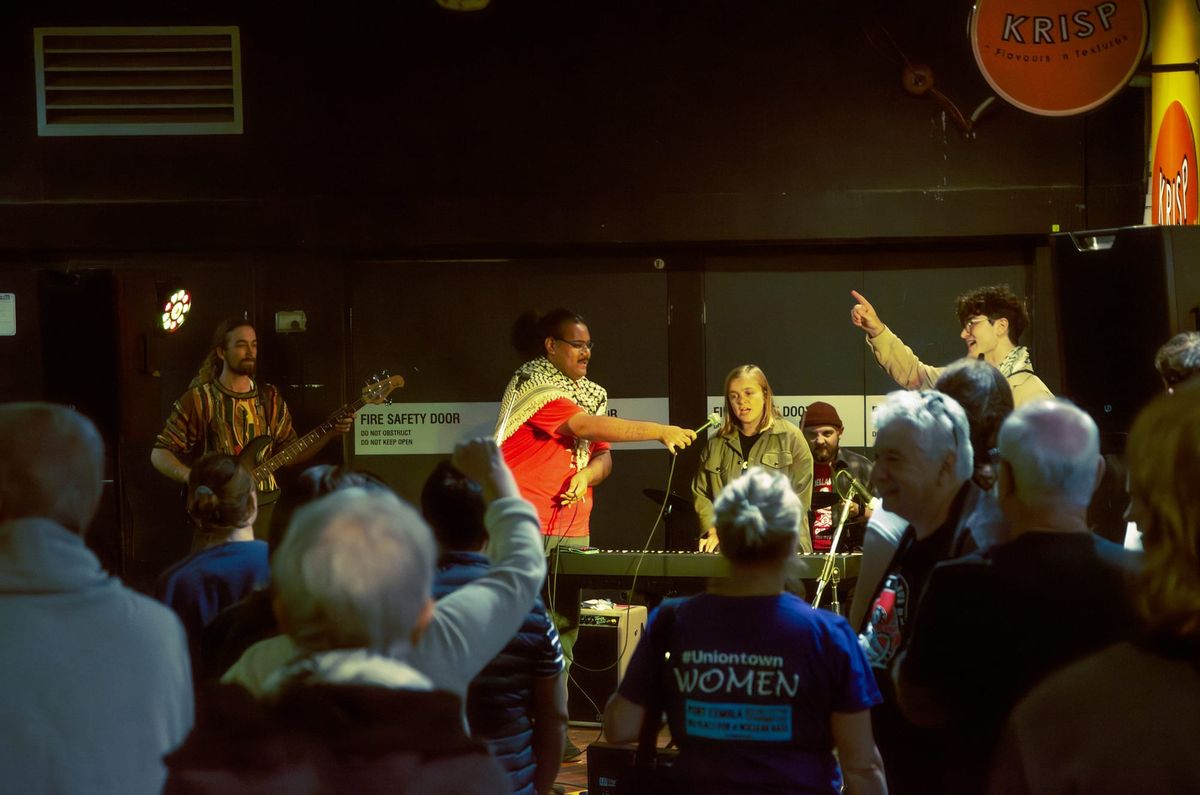
Coming off the back of the city’s long-running May Day parade on Friday, a music competition brought a buzzing crowd to Globe Lane for a showcase of working class anthems.
Six acts entered the competition by submitting an original protest song or cover of a classic, and three finalists performed on the night. There was a $1,000 price for the winner, thanks to the South Coast Labour Council.
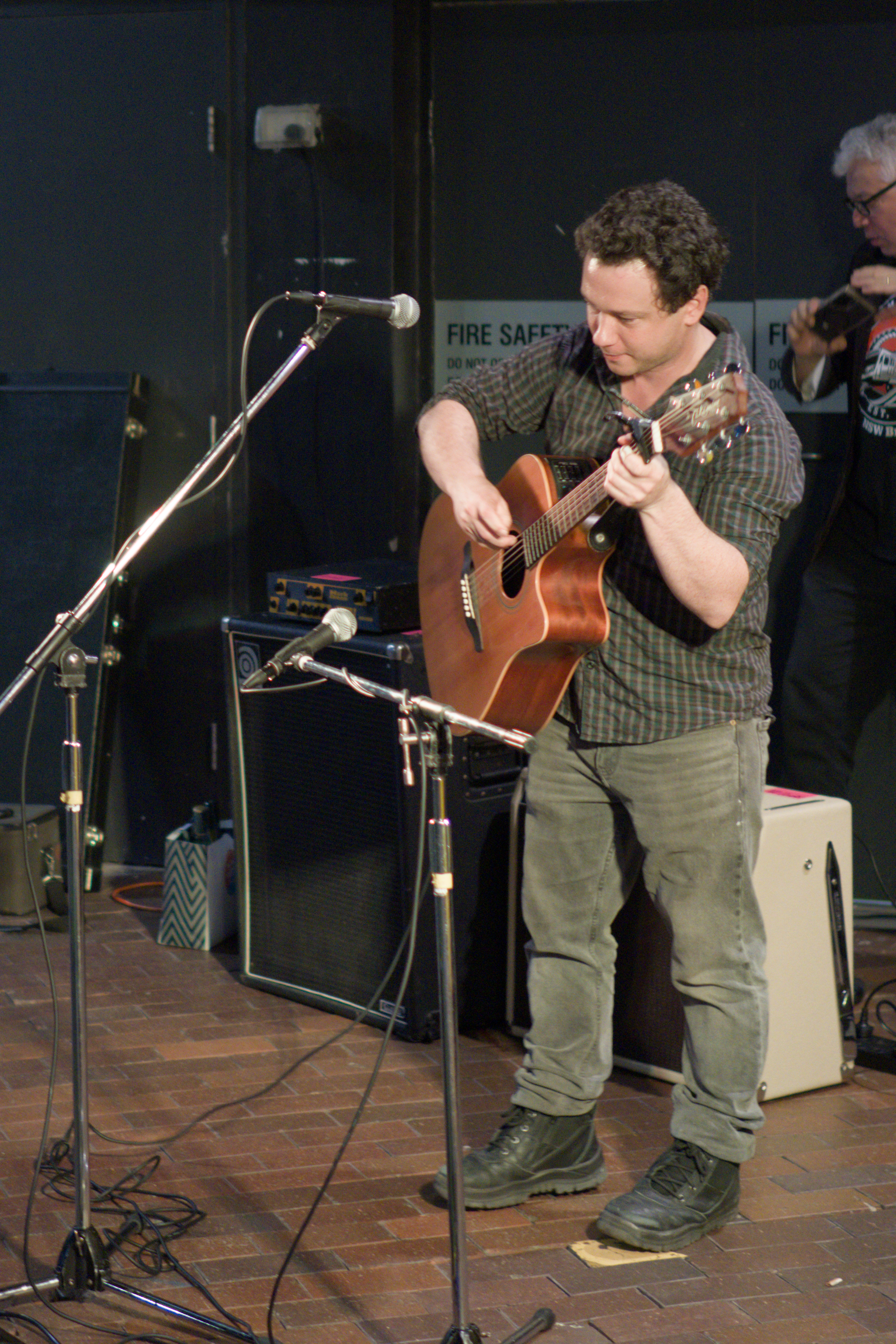
Performing first was Will Martin, a carpenter from Austin, Texas who emigrated to Australia three years ago. Long inspired by legendary acts Woody Guthrie and Phil Ochs, he is highly immersed in the local music scene, particularly at events like the Illawarra Folk Festival.
Chatting about his original song, which he performed solo, Mr Martin said he was inspired by a fear of speaking out against unfair working arrangements.
“It came from conversations at work about everyone’s conditions, and the fears people have about unionising, or even just speaking up,” he said.
“There’s so many good traditional songs, but I felt that what wasn’t being expressed was the fear involved in making change… like, you could lose your job.
“I was trying to write a song that was empathetic, but also conversational – kind of trying to raise some hope.”
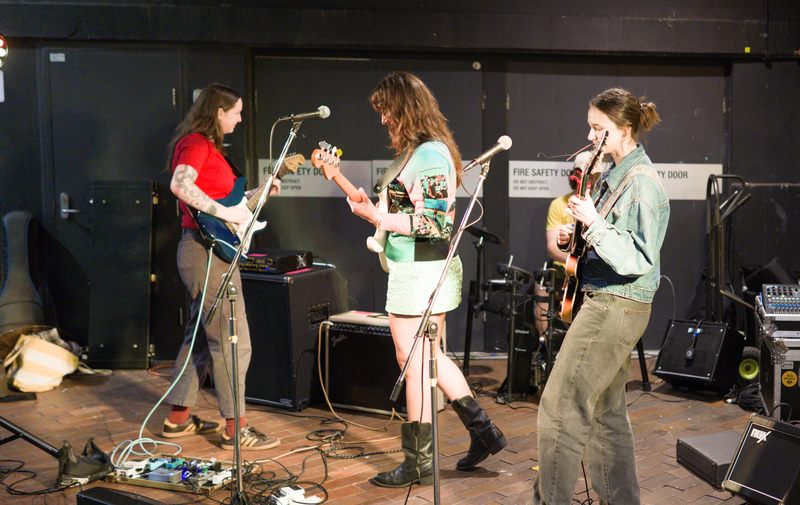
Local indie rock favourites Misso were up next, who performed a modern and playful cover of Billy Bragg’s “There Is Power In a Union’, with jangly guitars and gang vocals proclaiming “people have the power!”
If you’re not already across the four-piece – one of the most talked-about bands from Port Kembla Festival a couple of weekends ago – now’s your time to put Misso on your radar, because they won’t be a secret for much longer.
Cicadres were the third and final act, and you may recognise some members of this outfit from around campus. They performed crowd favourite ‘Bella Ciao’, a folk song dedicated to the Italian resistance against Nazi Germany.
Members Simon, Patrick and Megan told me their set – which also included ‘Long Live Palestine’ by Lowkey – was mostly improvised.
“We made this band for this show. We just met up one afternoon wanting to play this song, to see what instruments we have,” Patrick told me.
“Luckily, we have some fantastic musical talent throughout the band.”
Mr Martin was the winner of the competition, and almost didn’t believe it when his name was called. Before collecting his prize, he embraced his opponents/new friends.
Organiser Arthur Rorris observes music as an important force for social change, and has a rich history in union movements spanning generations.
“In the 40, 50, 60s, [unions] would have different competitions and pageants and floats. What we’re doing is modernising something that’s always been part of our history,” he said.
“We know that in a lot of the current social movements, a lot of young people are active – not just in terms of the marches… but also in terms of their cultural and artistic contributions.
“In the ‘50s, it was folk music. In the ‘60s, rock… later, with punk, and then with other musical forms, with rap. It’s always been about a message as well as the beat, and each generation has their own way of doing it.”
Mr Rorris is optimistic about the event returning next year. Considering hundreds of punters drowned out Globe Lane with applause after each song, that would surely be a popular and well-supported move for May Day 2027.