From Sarah to Renee Good: A Repetition of Violence
Will there be another witch trial?
Will there be another witch trial?
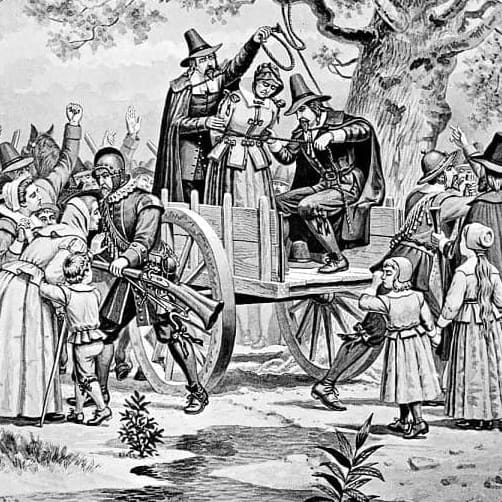
I recently watched a documentary called Witches: The Truth Behind The Trials that discussed the witch trials that occurred between the 15th and 18th centuries across Europe and America. It felt refreshing to look at something other than my TikTok or Instagram feeds and receive real information rather than the attention-seeking, mind-numbing, logic-lacking algorithmic content that sucks me into hours-long hypnosis. As I watched this fascinating docu-series, I found an unusual and disturbing connection to our modern society which I felt strongly enough to expand on.
The ubiquitous nature of our screens over the last decade has immensely harmed our collective psyche. And yet, we cannot ignore that without them, we would be ignorant to the mess that we are in.
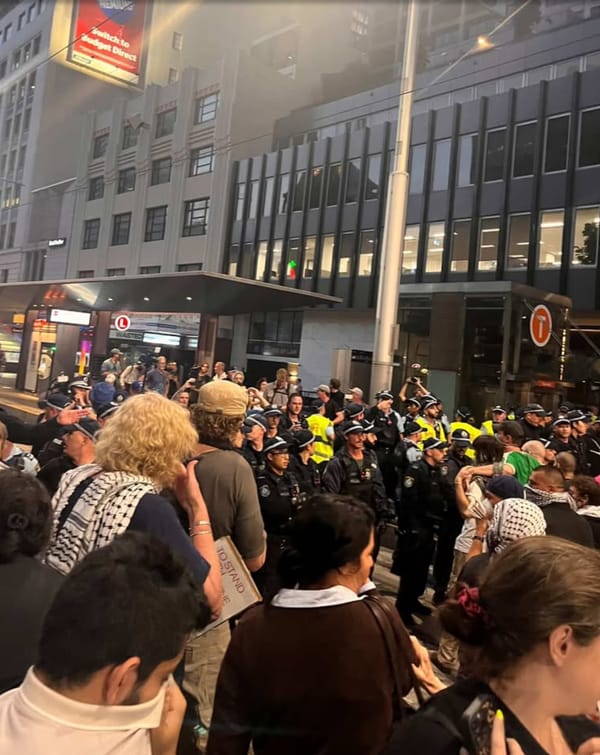
One video crossed my screen a few weeks ago. It was a video of a woman, Renee Good, in a car, attempting to drive away from two ICE agents in America. Less than a mile away from where George Floyd was murdered in 2020 by police, Renee Good was shot three times, killing her. The media’s response to the event was astonishingly inaccurate. Good was named a “domestic terrorist” by multiple sources including President Donald Trump, and the Homeland Security Secretary, Kristi Noem, who claimed that Good was driving towards the ICE agents in an attempt to harm them. As the video of the incident and her autopsy show, Good was shot at least twice from the side of her car, and the fatal bullet was reported to have entered her head through her left temple.
I think those who are of sound mind and in possession of critical thinking skills will agree who Trump and ICE remind them of. But, to me, these acts of terror also resonate with those of the Witch Trials.
Although the Salem witch trials are undeniably notorious, they were neither the first nor the last of these trials. In the docu-series, each episode describes and embodies the scenography of some of the different Western countries that held witch trials: Germany, Ireland, Scotland, England, Sweden, and America. We must not forget, however, the Eastern countries where women faced the same treatment, such as India, China, Japan, and Korea in Asia; Papua New Guinea in Oceania; and modern witch trials in Cameroon, Gamba, Ghana, and Nigeria, to name a few in Africa.
In Europe, the witch trials were heavily influenced by Christianity and its biblical teachings. The population truly believed in witches: people possessed by the Devil to prey on children and vulnerable members of the community, to bring them into His claws. Women in particular were targeted throughout the hunts, justified by the belief that females were the weaker sex and therefore innately prone to be gullible towards Evil. This idea developed from the ‘original sin’: when Eve consumed the forbidden fruit which released her from the ignorance of the garden, giving women the knowledge – and, therefore, power – that threatened men’s ability to keep control.
On a separate – but not completely different – note, America still weaponise(s) their scriptures to govern the people and land they occupy and deem their own – land that was stolen with the assistance of their religious preachings, divine missions, and the faith of their followers. Donald Trump, who frequently uses religion to justify his actions and theories, blatantly echoes every male leader depicted in the documentary.
As explained by the series, each country in which a major trial was held had a revered pastor or ‘witch academic’ who advised the judges, acting as a communicator with God or a religious intellectual. In Salem specifically, this was Reverend Samuel Parris: a bitter, angry, and aggressive man who would frequently give intense speeches to his congregation.
The Salem witch trials started in his own home, when his daughter and niece began dabbling with fortune-telling, and sneaking out at night. Once caught, they both began to experience seizures. Whether to avoid the consequences of their rendezvous having been unveiled or whether they were truly having painful seizures is still unknown, but regardless, the pair accused three women of witchcraft. These were Tituba, Sarah Osborne, and Sarah Good.
Tituba was a slave that the Reverend Parris had brought back from Barbados: a Black woman. Sarah Osborne had inherited land from her deceased husband and lived there with her children and her second husband – she was a female landowner. Sarah Good also owned a small strip of land, before her late husband’s family legally fought her for it and left her destitute. She became homeless and the village beggar. These rejected women were eventually hanged for witchcraft and given the options of pleading guilty to receive a prison sentence and their life spared, having repented, or pleading not guilty and being hanged for their supposed dishonesty. Those who faced prison had to confront a further sentence outside of their cell, being shunned from their community for witchcraft. Many, however, did not leave the jail with their lives.
Although the Salem Trials started with accusations of witchcraft – and certainly persisted under this guise – it became clear that as the trials progressed, privileged men in the village understood the power of inescapable accusation. More landowners started to be accused of witchcraft, including men. One man, Giles Corey, was accused, but he refused to give a plea. In order to get one, it was legal to subject individuals to torture. He died being crushed by stones, as his plea-less case ensured his son would inherit the land.
Religion and politics had intertwined with no escape, as was frequent at the time of colonisation, the slave trade, and the so-called ‘Enlightenment’. The beliefs of the people overrode evidence and truth, and become the definitive decider of another' s fate.
We may like to say history is repeating itself, but in fact, this chapter never ended. 400 years later, world leaders are still invading countries, kidnapping, and killing in the name of their religion. Conscious of consequence and meaning, we still kill Good.