Interview with Sheridan Harbridge, author of the musical My Brilliant Career
Interviewed by Levi Murray, Questions prepared by Serena Emanuele

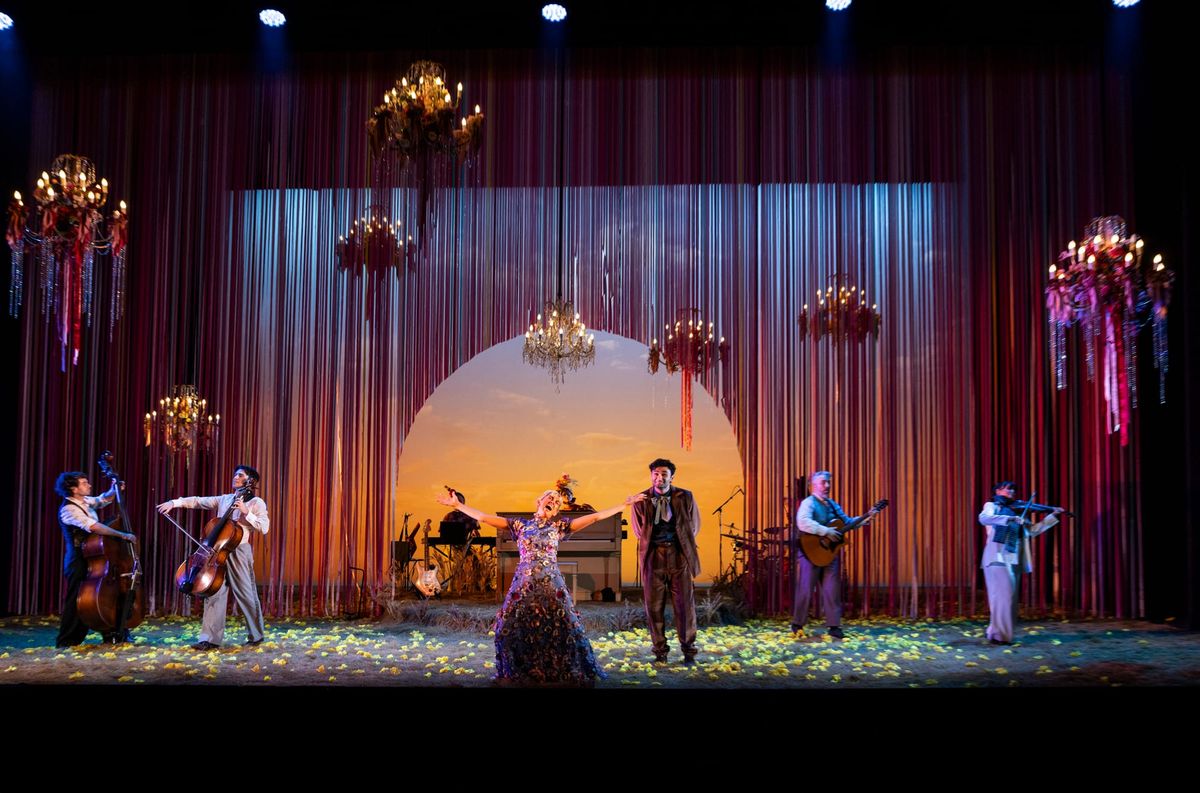
My Brilliant Career, the award-winning musical reimagining of Australian writer and poet Miles Franklin’s novel of the same name, is about to land at the Illawarra Performing Arts Centre, where it’s sure to wow Wollongong audiences. Ahead of its two-week run, we interviewed Sheridan Harbridge, one of the musical’s creators, to learn more.
Levi: Could you start with a summary of what the play is all about?
Sheridan: My Brilliant Career is about a girl who is 15 years old, it’s 1899 and before Federation. She is living a poor life on the farm, but inside her is the deep need to make art. But everyone around her is telling her “you’ll just get married,” because that’s the truth of it for a girl in [sic] this time. And, it’s about her butting her head against that expectation and going “no, I want something else for myself.”
L: In what ways does the play differ from or engage with the original novel by Miles Franklin?
S: Well, it’s a musical, it’s all singing and all dancing. And it really uses the form of music, to be her internal monologue of expressing that need for creativity. It really leans into the romance with the music.
L: Have you introduced any new themes or major plotlines in this adaptation?
S: No, but we have drawn on the bigger world of Miles Franklin outside of the book. We’ve used concepts from her other books and from her real life and brought them all together into this story. For example, in the end of the novel you don’t see the character achieve writing the book, because, of course, she didn’t know she would finish it, send it off, and have it become a sensation. But [in the show] we have her beginning to write the book of My Brilliant Career at the end.
L: What do you hope audiences will take away from the show?
S: I hope they are inspired to take the risk and choose the path that is in their heart, and to defy the expectations of their lives.
L: How are the feminist themes expressed in the musical?
S: There is a theme throughout the book and musical of how much women’s work is assigned to women, that arduous domestic work, and it keeps them exhausted, so they don’t have time to get politically active. Her defying and refusing to do that work is a big part of it. But also, there’s no fourth wall for that character, so she’s talking to the audience about what’s cooked [unfair], about those expectations, so it comes from her own mouth.
L: How has your journey evolved from an actor to writer to director?
S: I always thought, like Sybylla in the book, that I would be a writer. And I kind of accidentally fell into acting, and spent many years doing that, but started writing about ten years ago. To me, though, I think of myself as a theatre maker more than specifically a writer, because I feel like I have the images and the taste of a show in my body and the writing part is just communicating it out. So, I think of myself as a theatre maker.
L: What was the creative process and what inspired it?
S: The creative process was reading the book over and over and reading everything else from Miles Franklin and her biographies. And then looking for what I call the set pieces, the magic moments that make active theatre, which is less about the conversations but finding the visuals to hang conversations on. So there’s a ball, there’s a boat scene, Harry, the love interest, has a whip. And then it’s building the conversations around the physical set pieces.
L: Do you find it difficult to take words from a book and turn that into a visual experience?
S: Yes, because she will have an argument that will go for a whole chapter. And you want to serve the writer and put everything in there, but you’ve got to distill it down to one sentence often. Especially, for a musical, you have to let it ramp up to the song. So the ‘Killing your Darlings’ in this playlist was agony and having to really distill it down to very economic [and] pithy. And then, you know, you have to put feminism in one sentence.
L: Are you currently working on anything new or planning to?
S: Yeah, I am! Well, at the moment I’m performing a show about Chrissy Amphlett, which I guess is part of my attraction to writing and performing difficult women. And I'm writing another musical on the women of the Cascades Female Factory, which was the ultimate prison centre for female convicts.
My Brilliant Career, winner of five Green Room awards, will be showing at the Illawarra Performing Arts Centre from the 8-17 of May. Don’t miss out! Get your tickets now at merrigong.com.au