The AUKUS public inquiry and its demands
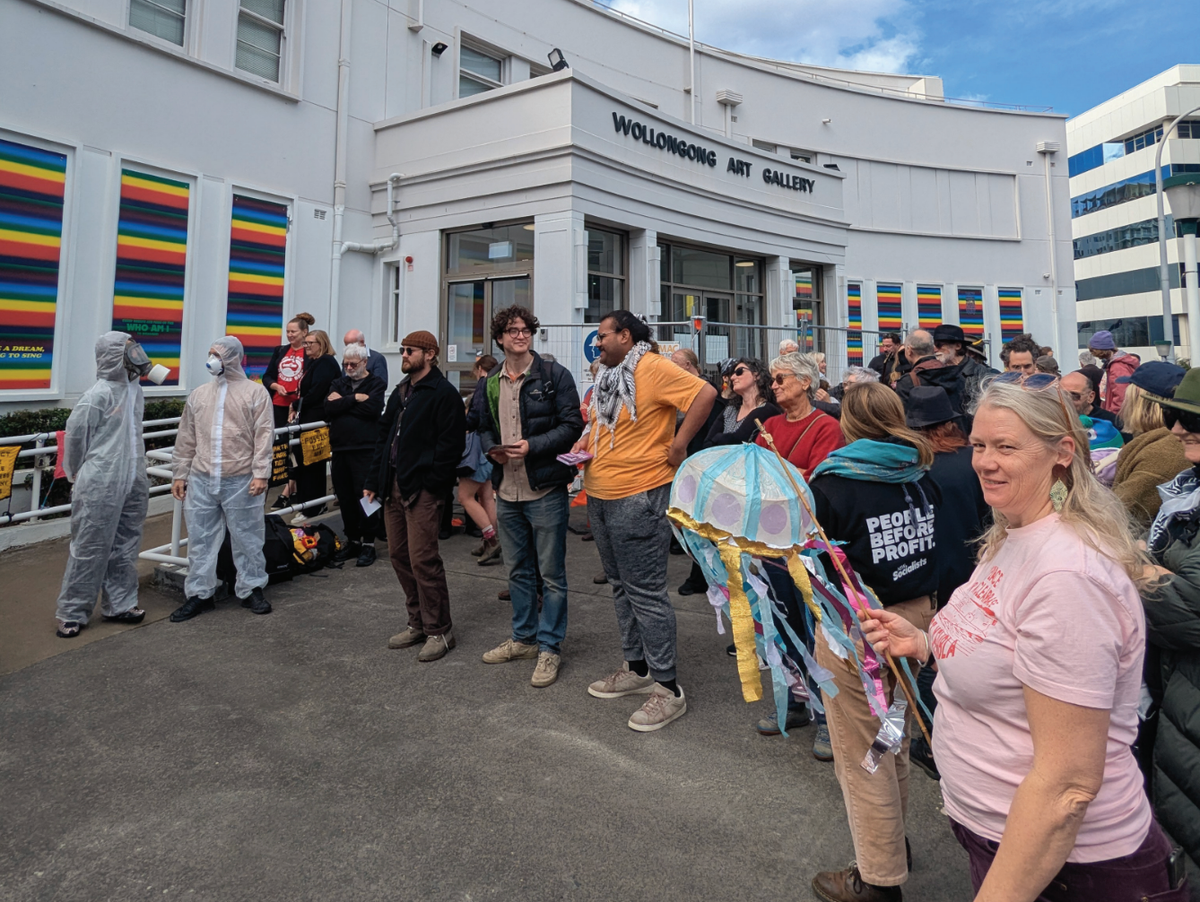
The Australia United Kingdom United States (AUKUS) Public Inquiry met on the 12th of August at Wollongong Art Gallery to amplify the concerns of Illawarra residents fearing the development of a nuclear base in Port Kembla.
The inquiry, led by former Labor MP Peter Garrett, seeks to answer:
- Will Australia ever receive the submarines we're paying for?
- Where and how will the high-level nuclear waste be stored?
- How many real Australian jobs will this create and at what opportunity cost?
- Why are we joining the US to potentially go to war against China, our major trading partner?
- Will AUKUS jeopardise our sovereignty?
- Will AUKUS make us safer — or turn us into a nuclear target?
Many speakers, some from the Labor party, came out to shame the Labor federal government for the secrecy surrounding the AUKUS deal. Their shared sentiment is that no considerations were made with locals in mind and how a military base would endanger and paint a target on Port Kembla and the surrounding Illawarra.
Arthur Rorris from the South Coast Labor Council was first to speak to the inquiry on the secrecy surrounding the formation of a base and made the response simple in relation to Port Kembla as an option: “Rule it out.”
“[AUKUS] represents a clear and present threat to our local economy, our safety, and our democratic processes,” Mr Rorris said.
“The entire foundational premise of this agreement rests on a deeply flawed, closed-door think-tank consensus that treats China solely as an imminent military threat.”
Mr Rorris went on to defend the sentiment that many share, that China is a close trading partner and will only be antagonised by strengthening our ties to the United States through the AUKUS deal.
“We have moved from partner to proxy,” he said.
“From ally to accomplice.
“We have just witnessed what happens to US proxies when they have US bases on their soil, they become the target.”
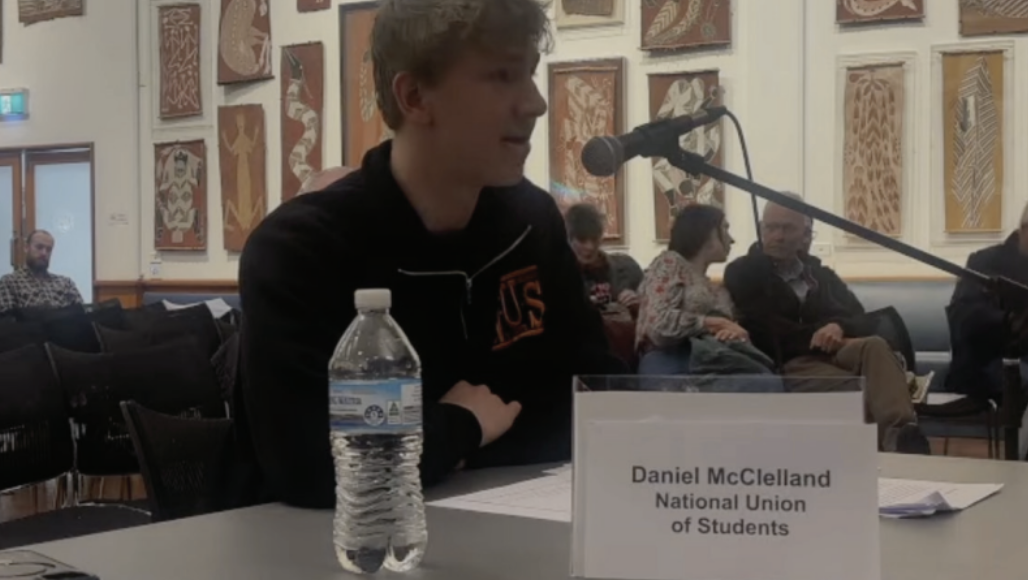
Daniel McClelland spoke to the panel as First Nations Officer of the National Union of Students (NUS) and on behalf of the union as a whole.
“Our position is clear, AUKUS must be cancelled,” Mr McClelland said.
He went on to state that the NUS’ opposition and perspective on the AUKUS deal is broader in scope, especially in relation to the role of universities in our society.
“Education should be focused on improving people’s lives and contributing to the public good, but the perverse influence of AUKUS has already entered our classrooms,” he said.
“It’s infiltrated our universities, our future professions, and our future professionals.
“If we allow our universities to become nothing more than research and development wings of the military industrial complex, we no longer have universities.
“Instead, we have weapons laboratories masquerading as lecture theatres.”
Mr McClelland focused on how Pillar 2 of the AUKUS deal seeks to further entrench our education sector within the military industrial complex. He reiterated the NUS’ stance which calls on the government to end incentives which increase the influence of defence industries within universities, such as the University of Wollongong’s ties to DMIT and the Royal Melbourne Institute of Technology ties to Thales, Boeing, and Northrop Grumman US.
Karina Lester, a Yankunytjatjara woman and commissioner on the panel, asked Mr McClelland about his work as First Nations Officer within the NUS and how he works to voice the concerns of First Nations people, especially within the Illawarra region.
“AUKUS comes with development and we’re gonna have to build sites to store nuclear waste,” Mr McClelland said.
“This is all going to compoundly impact on our First Nations peoples, we’re gonna have to tear up our land and our environment to place these facilities and it’s just not acceptable.
“There has been zero consultation with our First Nations peoples which is a real injustice.”
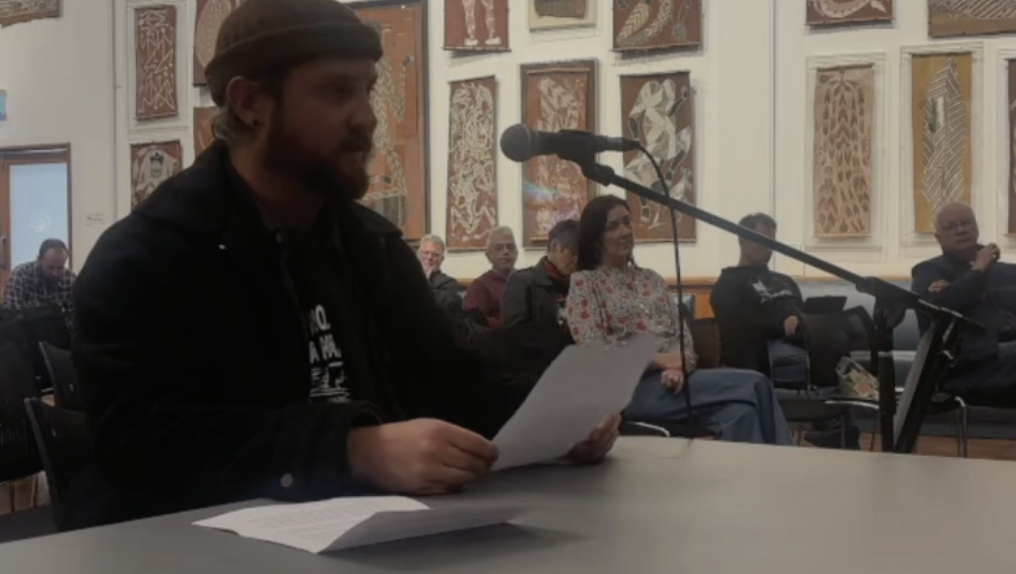
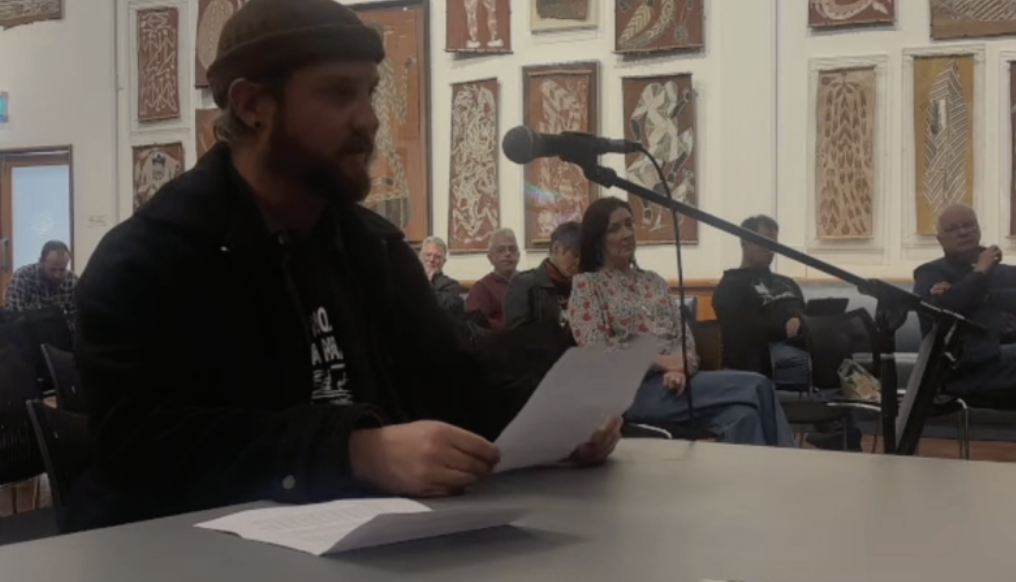
Ryan Chapman, a Wollongong student, former able seaman, and founder of About Turn - Veterans Against War and Racism, came to the inquiry to represent his group of veterans.
Mr Chapman reminded the panel how the Labor party cut $36 billion from the NDIS scheme and then followed it up with an announcement on increasing military spending by $53 billion.
“This is an attack on the lives of ordinary working class people,” he said.
“For years the healthcare system has been eroding, nurses and doctors striking for better pay and conditions: the government cries poor.
“Teachers struggling to keep up with workloads and short staffing: the government cries poor.
“Public housing tenants kicked to the curbs, having their homes sold off to property developers because the government is crying poor.
“But the AUKUS agreement shows that the government isn’t poor at all, it illustrates that their priorities are twisted. They would rather build machines of war than alleviate the crisis experienced by the working class.”
Mr Chapman recalled the Fukushima nuclear disaster in Japan where the conditions are still hazardous and unsafe for residents to return to. He also highlighted how in Portsmouth, England, where a naval shipyard with nuclear capabilities is housed, the local government stock iodine tablets in preschools and aged care facilities in case of catastrophic radiation exposure.
He reiterated that when nuclear waste cannot be stored on Indigenous land, it will have to be released into the ocean just as it was the case for Fukushima.
An anti-AUKUS rally was also held outside of the Wollongong Art Gallery during the inquiry, drumming up noise in support.