Your week five dating advice: An answer to the question 'what is a situationship?'
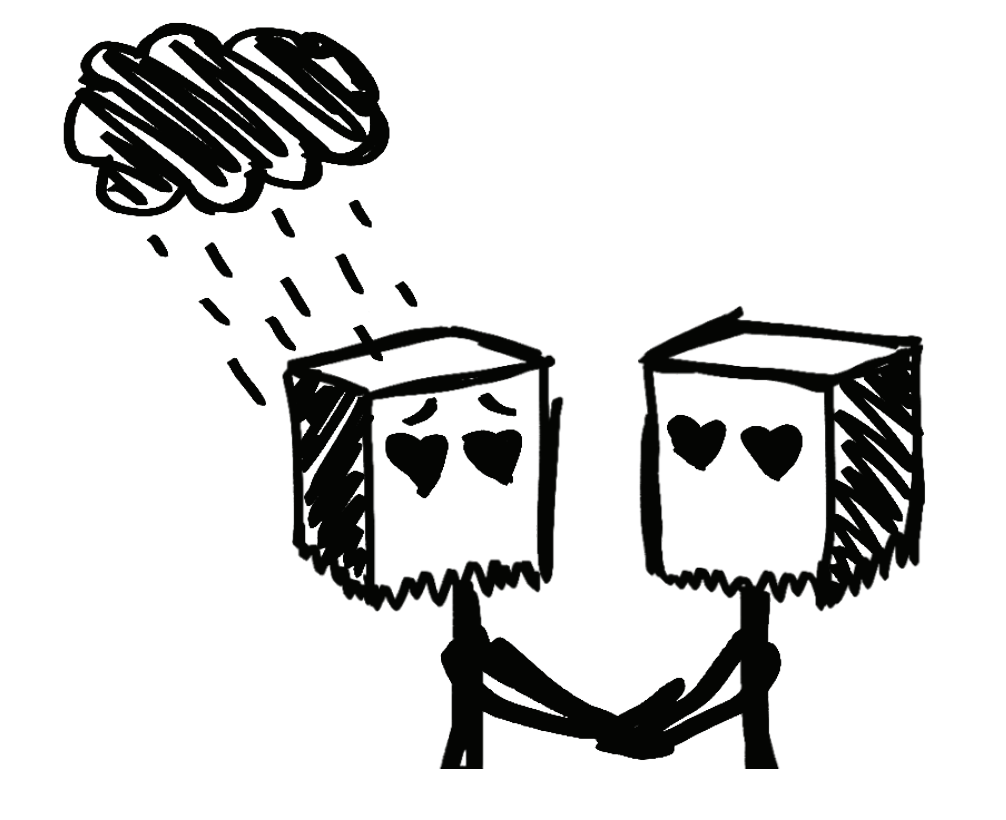
Hey wounded lovers of UOW. It’s your tragic heroine Jess, back at it again to give you some advice on how to deal with the current plague of situationships. Perhaps one option is revolution, maybe we need a dictatorship of the hoe-latariat? Nevertheless I endeavor to bring you well-meaning ideas to deal with the horrors of sex in the modern age. From next week, the google form to submit your questions about dating, heartbreak, situationships and all things sex and romance will be available on our IG stories. For now, enjoy some answers to the questions that did not get included in our last column.
Dear Gala,
What are the early signs of a situationship and how do I avoid getting into one (I never want to go through that shit again!)
Dear Situationship Investigator,
My expertise on situationships is empirical and unfortunately in order to understand how they work, I often find myself getting in them again and again and again. Thus, from this expertise I can offer you the signs of a situationship. However, in order to avoid getting in one, I guess my best advice is to do the opposite of what I do.
To paraphrase Deleuze like the wanker I am, situationships can be seen as a relation or assemblage that produce what Deleuze calls a symptomology. That is to say, because of the specific character of the situationship relation, studying the signs it produces is the best way to understand the situationship and thus avoid it. So good job on asking the right questions. Although nondefinitive, I would say that the symptoms which form the situationship are as follows:
- The claim to a future event without corresponding actions that put it into actualisation. The situationship claims to want to take you to meet their parents, their friends, and to take you travelling. However, the current organisation of your relationship would prevent this action from coming into fruition. You can’t meet their parents because you aren’t in a relationship. You can’t travel together because you don’t have the joint life-building as an infrastructure necessary to travel together. Yet, they still make these huge claims of future possibilities.
- Drastically shifting ways of describing you. If one day you are the best person they have ever met, then the next you are getting described as “evil”, or one minute you are beautiful and the next you are mid, you are probably bang on situationship territory. The fact they cannot form anything besides disparate impressions of you shows that their opinions of you are not stable enough to form a stable relationship.
- Spending a lot of time together, consistently, for a long period of time without relationship definition. If, like me, you are scared of rejection so you don’t talk about what you want out of a relationship then you might find yourself spending a lot of time with another person without them saying what you are. Honey, that’s a situationship.
- Shirking from your feelings about the relationship. Like if they are making claims about how they feel about you and then are horrified when you match their freak, you are definitely in situationship territory.
- Emotional outbursts around the time of sexual activity. Pillow talk might be deep and intimate or the opposite, leaving you feeling used. But often the biggest tells of the kind of relationship you have is how you are feeling and what they are saying at this time.
Again, a situationship might have additional features to this, but the majority of situationships in my experience are formed around these signs. So what do we do to avoid a situationship?
First, we need to think about why we don’t like situationships in the first place. Relationships are often treated as the end goal of dating, however I feel like this viewpoint dehumanises one’s romantic partner. If the governing structure rather than the other party is what is valuable about the relation, then we can find ourselves in really unsatisfying relationships. The situationship almost seems like the solution to this problem; there is no need to define the relationship so we can just focus on the other party. The problem with this is that it often takes advantage of one or both parties’ labour in a relationship without the structure of protection that comes with actually being in a relationship. This is what situates a situationship as different from non-monogamous dating, affairs, or short term flings. Other forms of dating that aren’t monogamous still take stock of both parties' wants and needs. The situationship disavows the wants and needs of one or more parties by doing away with the structures of care available in those forms.
So one method you can use is a balancing act between people focused and form focused. Your needs in a relationship are not only dictated by liking somebody, but also other aspects of your life and social system that organise your desire. In reflecting on this in yourself, the next best option is to communicate this to your partner. Even if this means rejection from them, you avoid the dreaded situationship. Further, is it really them rejecting you or you rejecting them? You need to own the narrative as the other party seems to control you by not organising the relationship. Who knows, if it is the right person for you, they might not want to be in a situationship either and you having this conversation could save you both a lot of time.
Dear Gala,
How can one get over their insecurities from their last relationship so it doesn’t affect their current one?
Dear Recovering Insecure One,
You caught me at the right time; I am trying to find the answer to this question myself. At the risk of speaking about myself too much, I will explain my current situation and offer the strategies I have used to move forward.
I recently found myself in a situationship that brought up insecurities about my body I did not even recognise I had. I have had periods of extreme alienation within my teenage body, struggles with disordered eating, you know the typical teenage girl bullshit. But after going to university, having my body change in response to my new environment, I had other priorities than the way I looked. This situationship made me conscious of the fact that my body had changed; little comments he made with no mal-intent led me to an awareness of my body as an enemy to the life I imagined I could have had with him. I felt if I was just a bit skinnier, if my skin was just a bit better, if I wore better makeup or bought new clothes that fit my new body better, then maybe he would make me feel more like a person. I stopped dating him when I realised that this was changing the way I viewed not only myself, but the way I viewed other women. However, leaving him meant that I no longer had access to his validation as a form of immediate relief from my insecurities.
The thing about insecurities which develop alongside another person is that we view their actions as the way to remedy the wound. When we rely on other people as the bandaid to our wounds, we are not only refusing to address the cause or manifestation of the wound itself, but also we defer to others for relief in a way they usually aren’t capable of. Sometimes we continue the existence of our insecurities because we become so addicted to the relief we get from someone else in response to vocalising them. Validation often does not even function as a bandaid, but rather an affirmation of the insecurity’s continuation.
So how can we help not to feed the insecurity?
The first is to avoid the affirmation of insecurity. This does not mean that you can’t talk to your new partner about your insecurities, in fact you should. But instead of falling into the trap of relying on their validation to maintain your insecurity, have a critical discussion about your insecurities and what support you need to actually address them. I was on a date with someone new recently, and I told him that I often felt uncomfortable with the way my body looked, partially because of a few comments ex-partners have made. He responded to this not by complimenting my body, or telling me how silly I was to be insecure. He instead just said, “I won’t comment on your body then.” I was a bit like a cut snake at that, I wanted him to go, “Jess you are the sexiest woman I have ever seen and you have crazy body tea,” but instead he did me a huge favour. He acknowledged my insecurity, and avoided engagement with it to place it outside the scope of our dynamic.
Another way I try to avoid insecurity is by critically asking myself how my insecurities do not align with my value system. When we, especially as women and queer people, feel insecure about ourselves we often dispel other values we claim to hold. I try not to think about how I fall short of the beauty standards I compare myself to, because I don’t want to shirk my commitments as a Deleuzian feminist. Think about the ways in which your insecurities keep you from accessing your value systems and ground yourself in activities that focus you to engage with things that are more important to you than your insecurities. Finally, remember that insecurities are deeply entrenched in your self-image, meaning healing is not something that will be immediate. Give yourself grace, take time and try to anchor yourself in other parts of your self image that you want to engage with.