“A really silly amount of fun”: Yve Blake talks new play Mackenzie
"Watching what our director Virginia has been cooking up, I’m severely gagged. So I can’t wait for our audiences to be gagged by it as well."
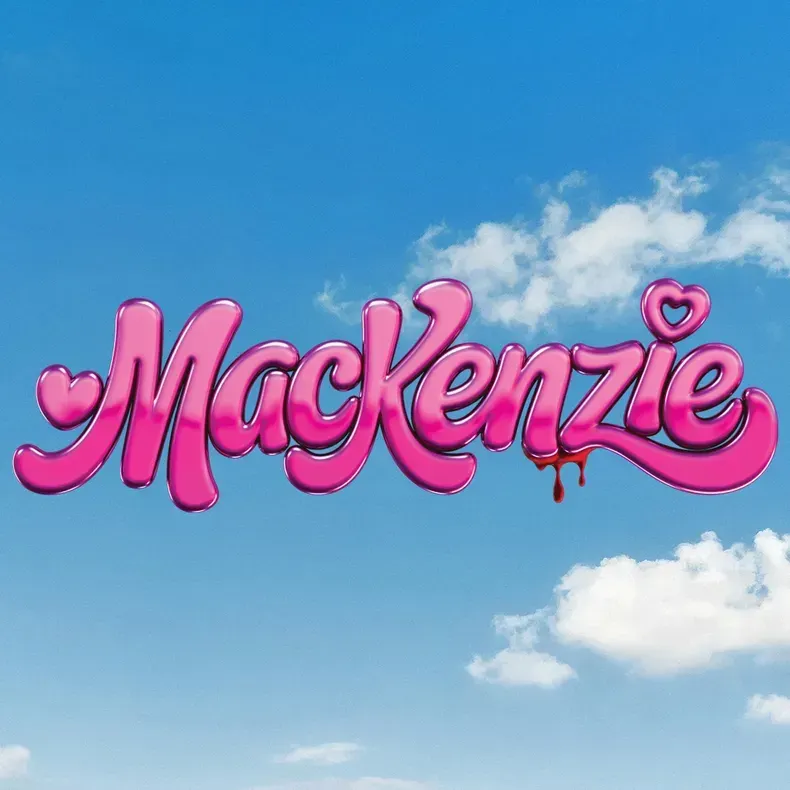
Fans of FANGIRLS, rejoice: much-celebrated writer Yve Blake is about to return to Aussie stages with her new play Mackenzie: a wacky new adaptation of Shakespeare’s Macbeth, which premieres in Sydney in June. During the show’s rehearsal period, I caught up with Yve to ask all about the process of writing the play and find out what we can expect from this “camp, dark and deranged retelling” (Bell Shakespeare).
Asher: Let’s start with the obvious: who are you, and what’s the show about?
Yve: My name’s Yve Blake, my pronouns are she/her, and I’ve written an adaptation of Macbeth for Bell Shakespeare. It’s an adaptation that asks, what if Macbeth was a 13-year-old girl, who was also a child actor, and what if Lady Macbeth was her ruthless stage mum, and what if our Macbeth, named Mackenzie, was stuck in the background of a very popular kids’ show in 2006. It kinda kicks off from there: the whole thing’s set in the nostalgic wonderland of the early 2000s. There’s a lot of low-rise jeans and pink Motorola Razr flip phones. The tone of it is sort of, like, what if Titanique met The Substance, so it’s really camp and silly, but it’s also this really dark social satire about the way we commodify women’s bodies, and the way we’re obsessed with fame and youth and this idea that to age is to expire.
A: Can I ask what inspired that idea?
Y: Bestie, honestly, sometimes an idea just falls on you like an angel has farted on your head!
But I think that when this idea came to me, I think it’s because I’m really lucky that… the first big show I wrote that wasn’t for the fringe circuit was a musical called FANGIRLS, and that was a show about teenage girls, and I wrote it in my early twenties. I got a lot of congratulations for that, for how young I was. And I think, as I neared turning 30, I started to harbour this private anxiety that, like, because I’d been so congratulated for doing something at what people told me was a really young age, I wondered if people would care if I did another thing and I was no longer 22. I think that’s actually such a pervasive thought that people have, I think we all have gremlin inside us that wants to Google things like ‘Phoebe Waller-Bridge Fleabag how old when’, you know, that wants to ask ourselves, ‘as I age will I become less valuable or powerful?’ I think that was something I was privately negotiating with.
Y: Macbeth is this timeless banger about toxic ambition, but what’s so interesting is that, if you know the show, Macbeth, as soon as he becomes king – which he does by murdering a guy – he’s absolutely plagued with the fear that he’s going to be dethroned. So, he just has to keep murdering, right? He puts a hit on his best friend and his best friend’s son, so they can’t take the throne. Then he puts a hit on Macduff’s entire family, because he’s been told to beware Macduff. Then he goes on this killing spree, because he’s just so scared that he won’t get to stay king. And I think that fear, about, like, ‘will I get to keep any power I’ve accrued?’, for me it felt like such a parallel to what it must feel like to be a famous young woman in Hollywood, right? When you know that the system demands that you are only allowed to keep the spotlight for so long before you’re branded old and cringe, and it’s time for the next young diva to take the spotlight. Do you see what I mean? The thing that this play was about, written in 1606 but it’s a medieval story inspired by true events that took place centuries before, and just to think that this anxiety of ‘okay, I’ve got power, but how do I keep it?’, to think of that being so timeless, it just felt like such an opportunity, you know?
A: Some audiences have already gotten a taste of Mackenzie through a few readings that happened last year.
Y: Yeah, that was so much fun.
A: What was the reaction to that like, and what do you think we’re going to think of the full production?
Y: Honestly, those readings were such a treat, because in developing this show I made a really clear decision. Sometimes, if you want to get a theatre project made, you might take the beginning of an idea to a company and ask them to commission you to write it. But, I decided in this instance I would actually write the whole thing without taking any commission money – you’d call that ‘on spec’. I would write it on spec and rather than developing it in-house at a theatre company where I’d be forced to take their notes, instead I’d develop it independently by co-producing a series of public readings. And it was kind of incredible because it meant that I got to really develop it on my own terms, and the only notes I had to take were my own thoughts or notes I solicited from the funniest people I know. I would, like, text the script to the group chat and go, ‘who has time to read this? What do you think?’ So, it was very emotional, then, when those readings were met with people who I guess had found my work through FANGIRLS, and who were sort of my dream audience, the audience I care most about in the world. Largely young people, largely girls, gays, and theys. It was really special to get such a great reaction to those readings, and to learn so much about the text.
Y: Those readings were six people in front of music stands with no costumes, no lights, no nothing, and now for the actual production… I actually can’t prepare you for how stupid the costumes and wigs are gonna be. Like, it’s really goofy. I’ve actually never had more fun with the design of a show, because it’s nostalgic too. It’s so fun to watch our designer put the show together and know that we’re playing with nostalgia, there’s so much fun to be had being like, ‘remember when we used to wear this?’ I’m really excited, and there’s also, like, a few moments of special effects in the show, and I can’t say more than that, but watching what our director Virginia [Gay] has been cooking up, I’m severely gagged. So I can’t wait for our audiences to be gagged by it as well.
A: As a writer, what’s it like watching a team of performers bring your work to life?
Y: It’s actually the most potent drug in the world. I was lucky to be in the first season of FANGIRLS, but it occurred to me during that rehearsal that getting to sing the songs wasn’t nearly as fun as watching other people sing them. And so, it sort of crystallised this realisation that the greatest reward of writing something is getting to watch people who are smarter and funnier than you get their hands on it. Honestly, that’s always uniformly my favourite part of the process. They’re like racehorses, this cast, but they’re honestly kinda cracked in the head – non-derogatory, like, I love them, they’re actually just the best rats in the world. I can’t wait, because they make my writing funnier than it is and I love that. It’s such a pure feeling, the love one has for a cast. I know you’ll have felt it, but when you’re doing a show together… it’s such a pure love that I have for this cast. And it’s also quite reassuring to be able to say to my friends, ‘hey, you actually should buy tickets to this show, because even if my script is mid, these performances won’t be. So I can say with confidence that this is worth your money.’
A: I’m curious, what were your own experiences with Shakespeare like? Was there something that drew you to adapt a Shakespeare play?
Y: I’ve never really been a particular Shakespeare buff, if I’m honest. I do distinctly remember in Year 9, we had to study Romeo and Juliet, and I remember the collective groans across the classroom because it was the term where we had to do Shakespeare. Then our teacher said that for the next two lessons we would watch Baz Luhrmann’s Romeo + Juliet. I just remember all of us had a crush on Leonardo DiCaprio or Claire Danes or both. It was so exciting.
Y: I think that FANGIRLS is my villain origin story in that it got me hooked on making theatre that really prioritises first-time theatregoers. Specifically young people. The biggest reward of FANGIRLS was how many young people came to the show and claimed it, and said ‘this is ours’. So I think when this idea occurred to me, I quickly realised that if I did an adaptation of Macbeth, it would mean that potentially a lot of teenagers would get dragged along and for many teenagers it would be their first time in a theatre. And that was so exciting to me. It was irresistible. Like, if that’s true, how do I make the funnest school excursion you’ve never been to? How do I make the naughtiest, campest, cheekiest, silliest, goofiest experience for young people who until that day might think theatre is cringe? Like, challenge accepted, this is my favourite way to make work, let’s go.
A: What do you hope an audience will get out of Mackenzie? How are we going to feel when we walk out of the theatre?
Y: My dream is that audiences have a really silly amount of fun. The humour in the show is quite edgy sometimes, and provocative, and that’s because the original show itself was so provocative. There’s some stuff in the original Macbeth that was so hectic. Like when Lady Macbeth is like, ‘hey, if I had a baby, I would bash its brains out if I said I would, you said you’d kill King Duncan, so go do it.’ There’s some crazy stuff in the first version, and that was like my permission slip to go, ‘okay, I’m gonna make this script truly unhinged.’ So I hope that people are shocked, deeply entertained… I hope they have a really adrenal experience, I really like to make theatre that really gets your heart racing. I like to make work that has something to say but says it in the silliest way possible. So I also am hopeful that the show is a starting point for conversations around child stardom and our obsession with youth. And if I’ve done my job correctly, the show will really make fun of the voice in your head that says, ‘have I done enough at my age?’, you know, that attaches age to value inside of all of us. I think it’s a really toxic and pervasive voice that we have. But like, that’s my kind of worthy answer, my top-line answer is I just hope everyone has a really silly amount of fun, and I hope it’s really memorable. I think that’s the marker of a great night at the theatre, that you remember it for days after. Or months or years. That’s what I’d say.
Mackenzie plays at the Neilson Nutshell, Sydney, from the 6th of June to the 18th of July, before heading to Arts Centre Melbourne from 23 July to 9 August. To make sure you don’t miss out on this memorable night at the theatre, you can grab your tickets now from the Bell Shakespeare website.