'Today we say free Palestine': on the Wollongong Nakba Day rally
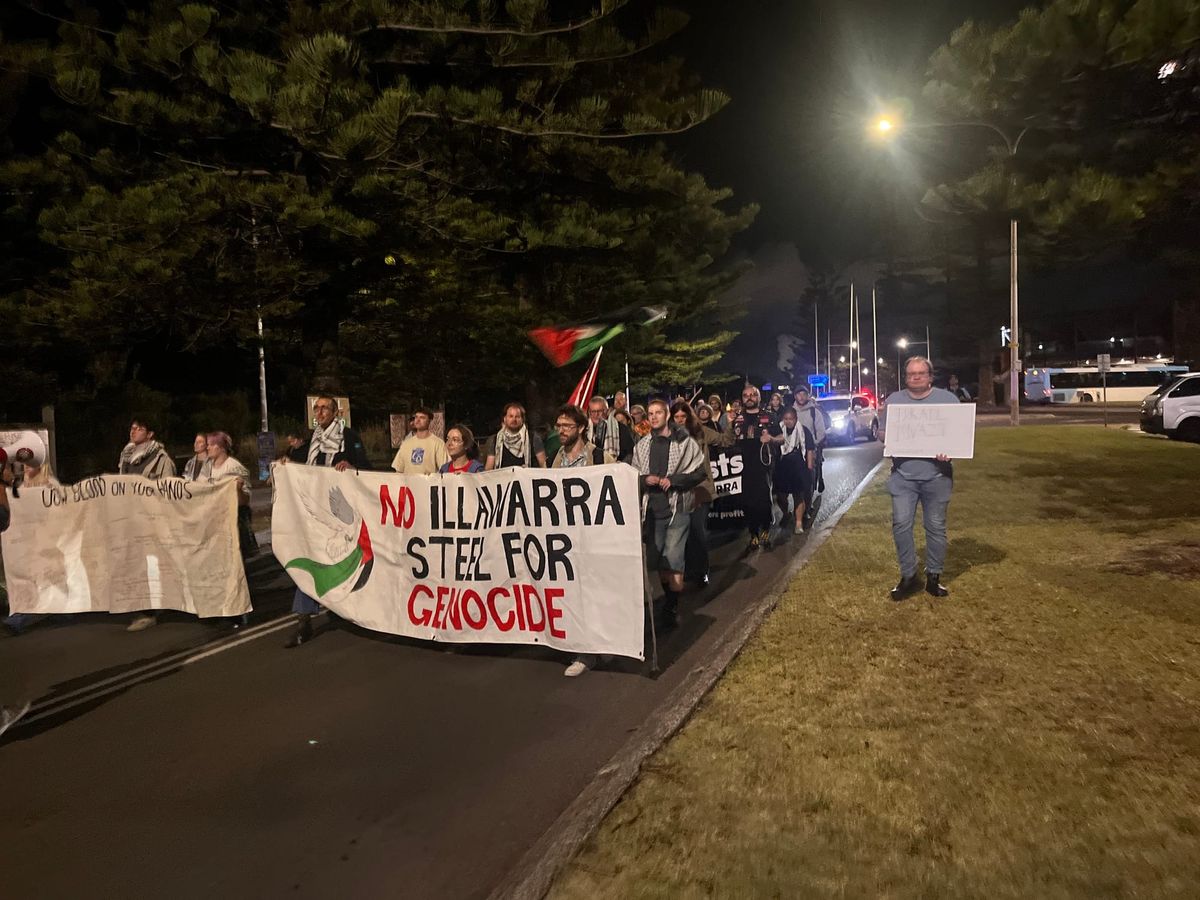
May 15th 2026 marked the 78th anniversary of Al Nakba, meaning ‘the catastrophe’ in Arabic. In 1948, over 700,000 Palestinians were displaced from their homes in a violent dispossession of land. Al Nakba is not an isolated historical event, rather the origin of Israel’s ongoing settler colonial violence against Palestine.
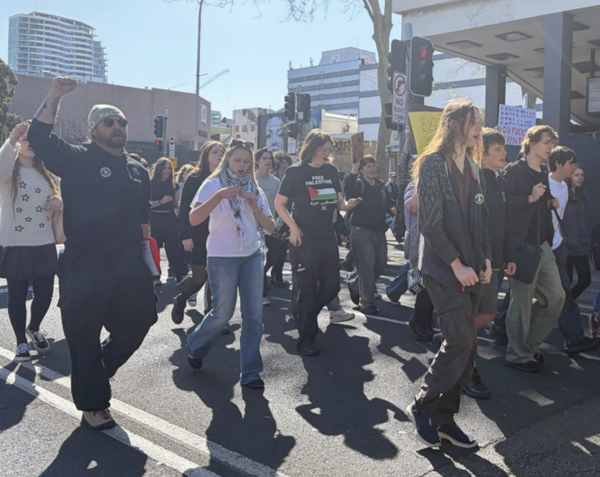
In Wollongong, people gathered to mourn the continued loss of life in Palestine and rally against local manufacturers and businesses’ complicity with Israel. At the protest, organised by Wollongong Friends of Palestine, locals rallied around the outside of the Crown Street Amphitheatre, where speeches were presented before the group marched to the lighthouse on Flagstaff Hill. A diverse mix of people were present, from local activists and organisers from groups such as the UOW Palestine Society and Wollongong against War and Nukes, to university and school students.
The rally began with a Welcome to Country from Uncle Mark, an Aboriginal Elder of the Yuin and Dhawaral nations of the Illawarra and South Coast regions. During his speech, Uncle Mark highlighted the commonalities between the struggles of Palestinians and First Nations Australians against settler colonialism.
“We can all take great courage and heart from the growing pro-Palestinian movement around the world to best support the people of Gaza and across Palestine, who have endured so much over the decades since 1948, and particularly over the last two-and-a-half years.”
The rally then heard from Safaa Rayan, a local Palestinian woman and member of Wollongong Friends of Palestine. She spoke on how her father’s second birthday coincided with Nakba day, meaning each year his birthday is a reminder of what his family has lost. She spoke of her father’s family’s forced displacement by Israel from the coastal town of Barbara, which was colonised and now known as Ashkelon. She spoke on the memory of the Nakba held by survivors like her father, and how each year she hoped for her father to see a free Palestine.
“With every passing year you hold on to that hope, and then you watch your children grow and you pray that you are not your parents, 80 and praying for a free Palestine and hoping that on your 81st birthday, you will see a free Palestine.”
The next speaker was Lola, an activist who had been working in the West Bank, supporting shepherding families and documenting the harassment communities face. Her work in Palestine involved accompanying children to school when their route put them at risk, walking with shepherds as their flocks grazed, monitoring checkpoints for harassment, observing demolitions and maintaining a calm presence for the families. She emphasised the importance of the International Solidarity Movement and having an international presence in Palestine, as “sometimes harm can be prevented by simply being present, letting those who commit abuses know that the world is watching.” She encouraged those who are able to consider getting involved.
The following speaker was activist Kim Sattler, a member of Wollongong against War and Nukes (WAWAN) and anti-zionist Jewish Australian. She spoke on the need for “bravery, courage and leadership” in opposition to rising fascism and the role of the public in bringing about change. She stated, “every other time we’ve had to oppose fascism or conscription or apartheid, the leadership did not come from those quarters. The people led that fight and they are the ones that shifted public opinion.” She also commented on the diversity of Jewish people in Australia, describing the community of anti-zionist Jewish Australians as “very robust.”
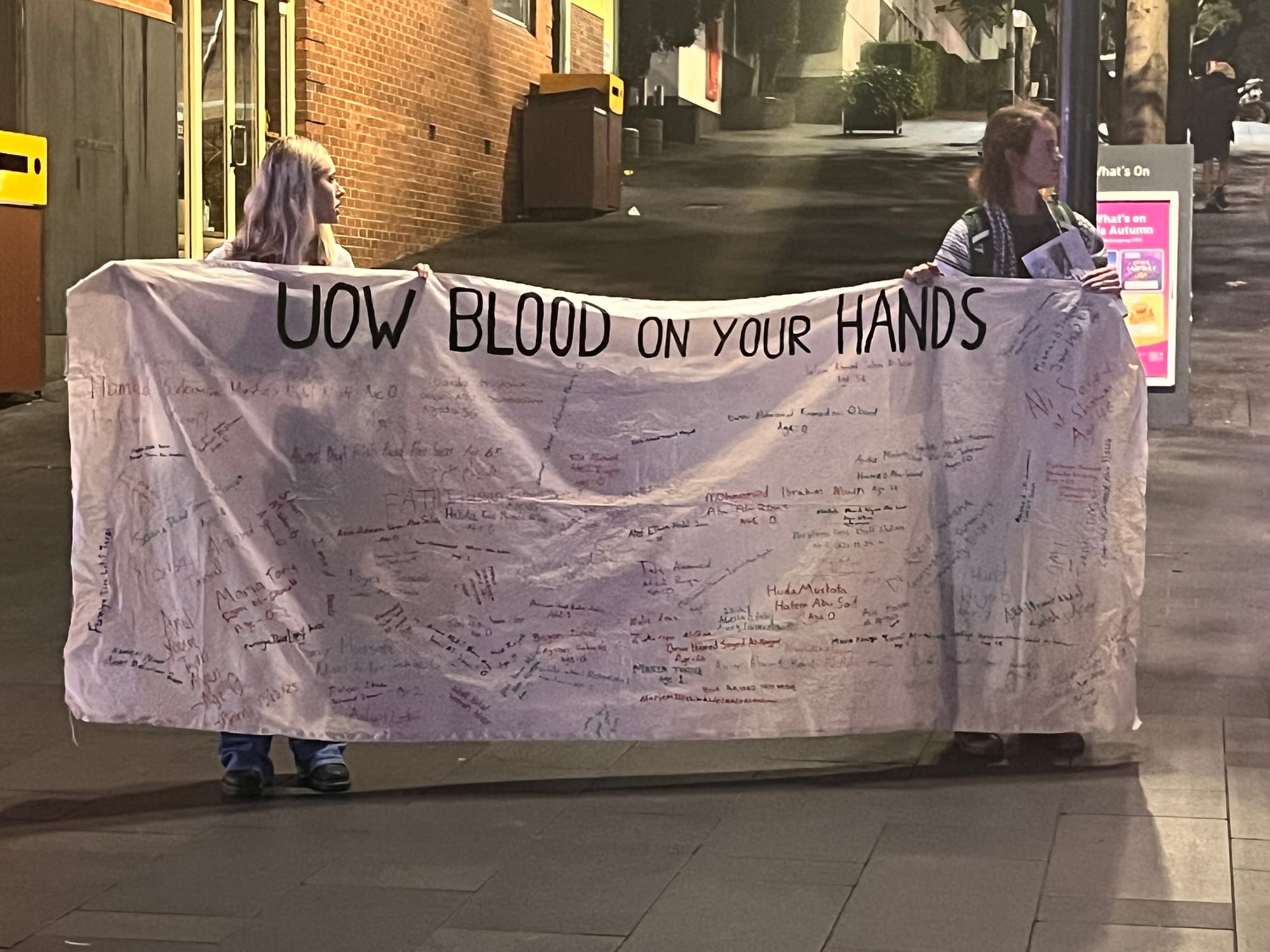
The final speaker was Simon Upitis, the Education Officer for the Wollongong Undergraduate Student Association (WUSA) and a member of Students for Palestine. He spoke on the complicity of institutions, particularly the university, in aiding the genocide, and the hearings from the Royal Commission into anti-semitism. He emphasised the conflation of the anti-semitism and anti-zionism within these hearings. He also spoke on his experiences with Palestine activism on campus. One such demonstration was a banner that students were invited to write the names of Palestinians who were murdered in Gaza, with some students expressing confusion at the victims aged zero. “I think it says something about the sheer scale of the genocide, that even when you look at it in the most clear form possible, it’s hard to grasp what you’re actually looking at, it’s hard to grasp what it actually means,” he stated.
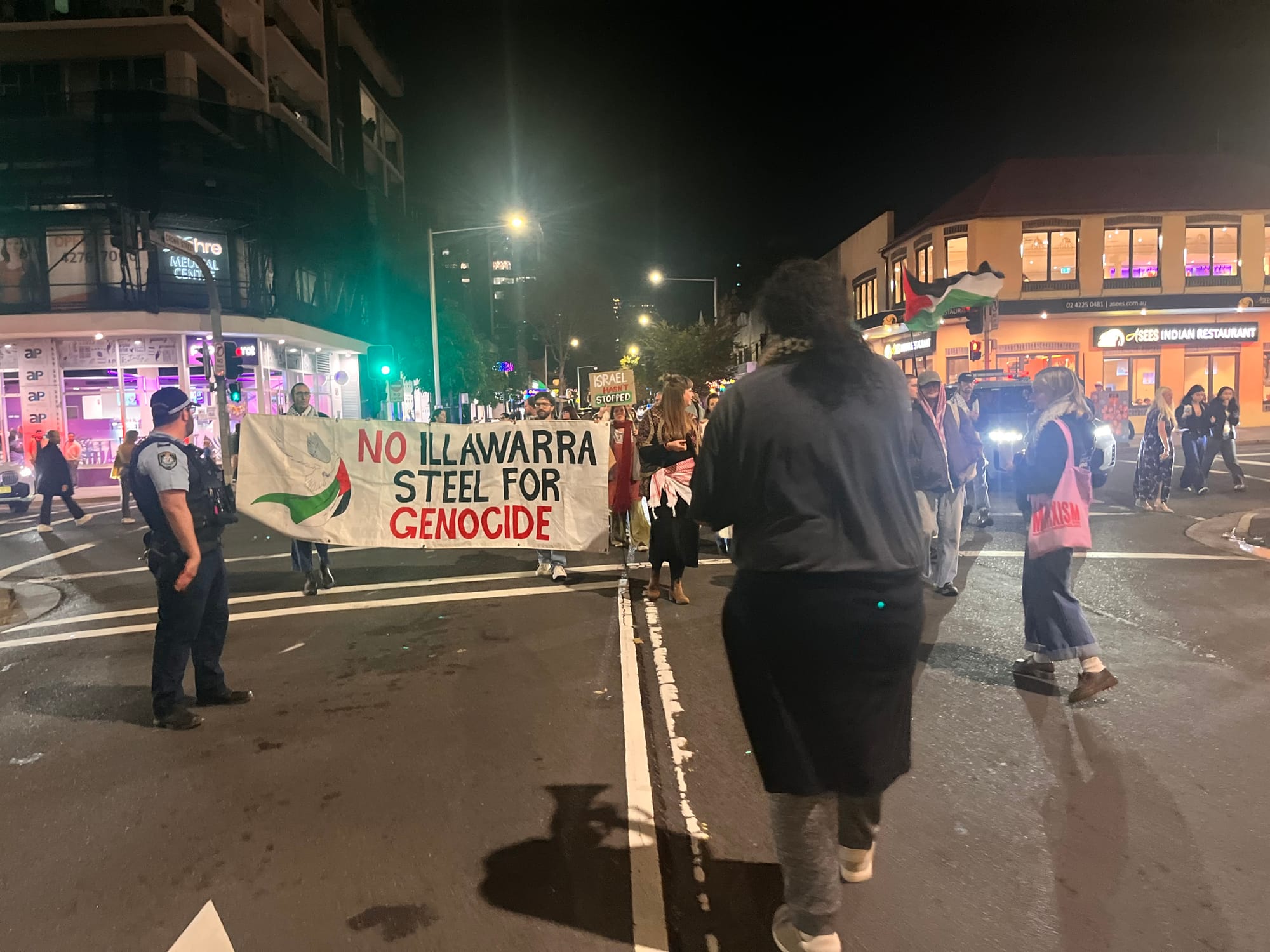
After the conclusion of the final speaker, the rally gathered and marched to Flagstaff Hill. The group marched along Crown Street, shouting chants such as “Israel, USA, how many kids have you killed today?” and “Israel out of West Bank, Israel out of Gaza, Israel out of Palestine, long live the intifada.” The purpose of the chants were clear; to draw attention to the mass destruction of lives caused by Israel’s continued and ongoing colonial project. The front of the rally held the UOW Palestine Society’s banner made during Palestine Solidarity Week, which listed the names of Palestinians murdered by Israel, a chilling reminder of both the lives lost as well as the complicity of local businesses such as UOW in the genocide. During the march, candles were held to memorialise the lives lost.
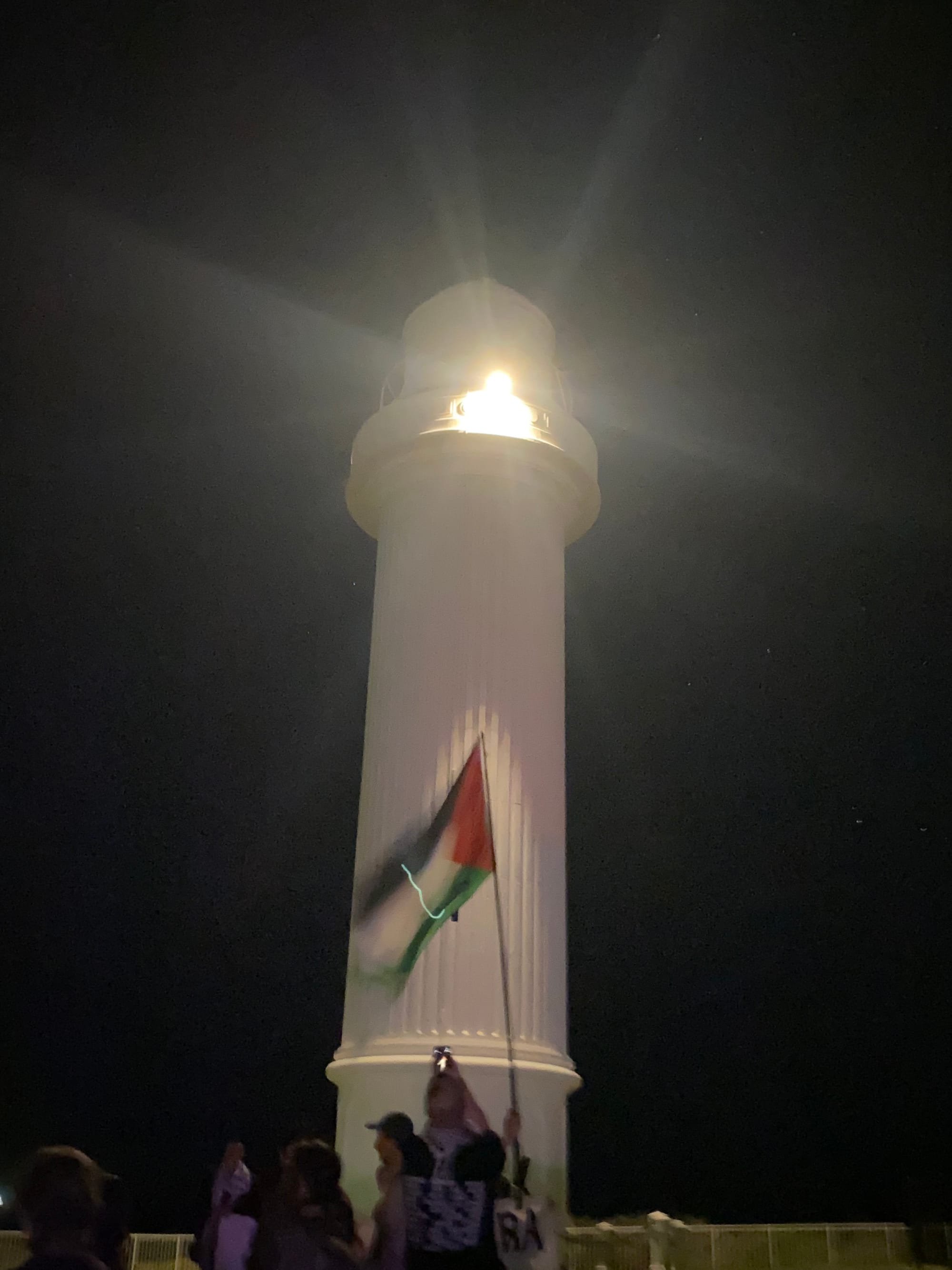
The rally ended at Flagstaff Hill, where final reminders were given about the importance of continued action and resistance in response to the horrific violence of Israel. The rally ended with a prayer for Gaza.
After the rally, The Gala spoke with an organiser of the rally, Tidus Funaki. He is the Ethno-Cultural Representative at WUSA, a Palestine activist and a member of Socialist Alternative.
“Today is Al Nakba,” he said.
“This is the day in 1948 when Israeli settlers invaded Palestine, massacred and displaced almost a million Palestinians, the Indigenous people of Palestine, and then created the colonial state of Israel that we know today.”
Tidus said the turnout for the rally was amazing and a reflection of the growing Palestinian movement around the world.
“It’s absolutely a testament of how far the Palestine movement has come from 2023 when the genocide in Gaza started,” he said.
“More and more people are seeing the double standards of their governments.
“Seeing that their governments are fully complicit in not only in the genocide in Gaza, but in genocides and conflicts in wars across the world and seeing it as an injustice of the system rather than happenstance.”
Tidus said that “if you are pro-Palestine, if you’re against the genocide or for human rights just in general, if you’re angry at the fact that the system constantly produces massacre upon massacre upon massacre,” then to get involved in the next protests, such as the overnight picket of the Bisalloy Factory from June 14th to 16th.
When asked if there was anything else he would like to say, he had two passionate words.
“Free Palestine!”
Photos by Jess Hewett and Elora Plummer.